Before You Go, Let’s Talk About Your Parts
Tell us about your part, quantity, and key requirements. Nova Precision Manufacturing Co.,Ltd can help you choose suitable materials and manufacturing processes for your project.

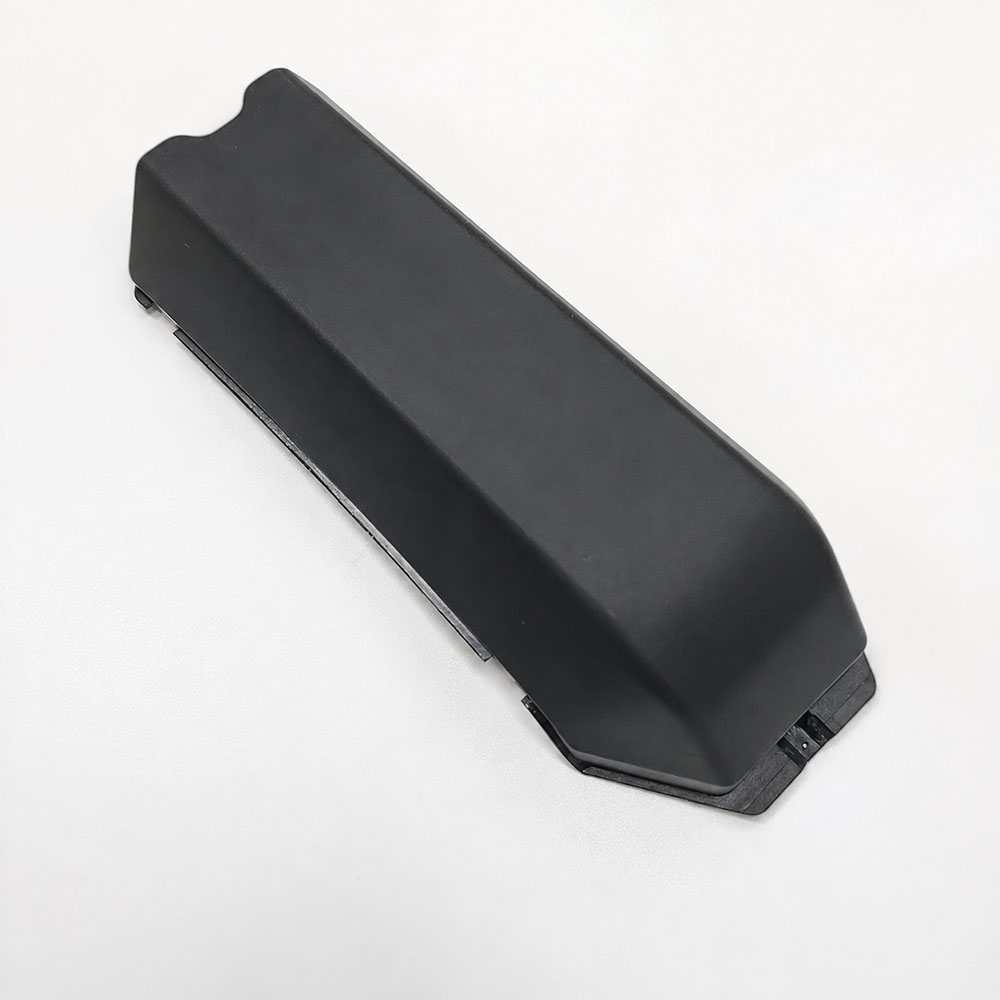
A practical guide for B2B buyers on timing the move from CNC machined plastic parts to injection molding, covering break-even volume, DFM, tolerances and tooling.
Switch from CNC plastic machining to injection molding when three conditions hold together. The design is stable enough to cut into steel or aluminum. Forecast demand clears the break-even quantity once tooling, revisions and setup are counted. And the part can be molded at the tolerances and in the material the application needs. Quantity alone is not the trigger. A buyer who tools at 500 pieces with an unfinished design can pay twice, once for the mold and again for the changes. A buyer who keeps machining 3,000 pieces a year at a flat unit price may be overpaying with no good reason. This guide shows how to calculate the crossover. It also covers the design, material and tolerance checks that decide whether a machined part can be molded, and what to prepare before requesting a quote.
Tooling is justified when all four of these conditions are met.
If one of these is missing, the better move is often not to switch yet. It may be to keep machining, or to use prototype molding as an intermediate step. Prototype molding produces real molded parts in limited quantities before a larger tooling commitment.
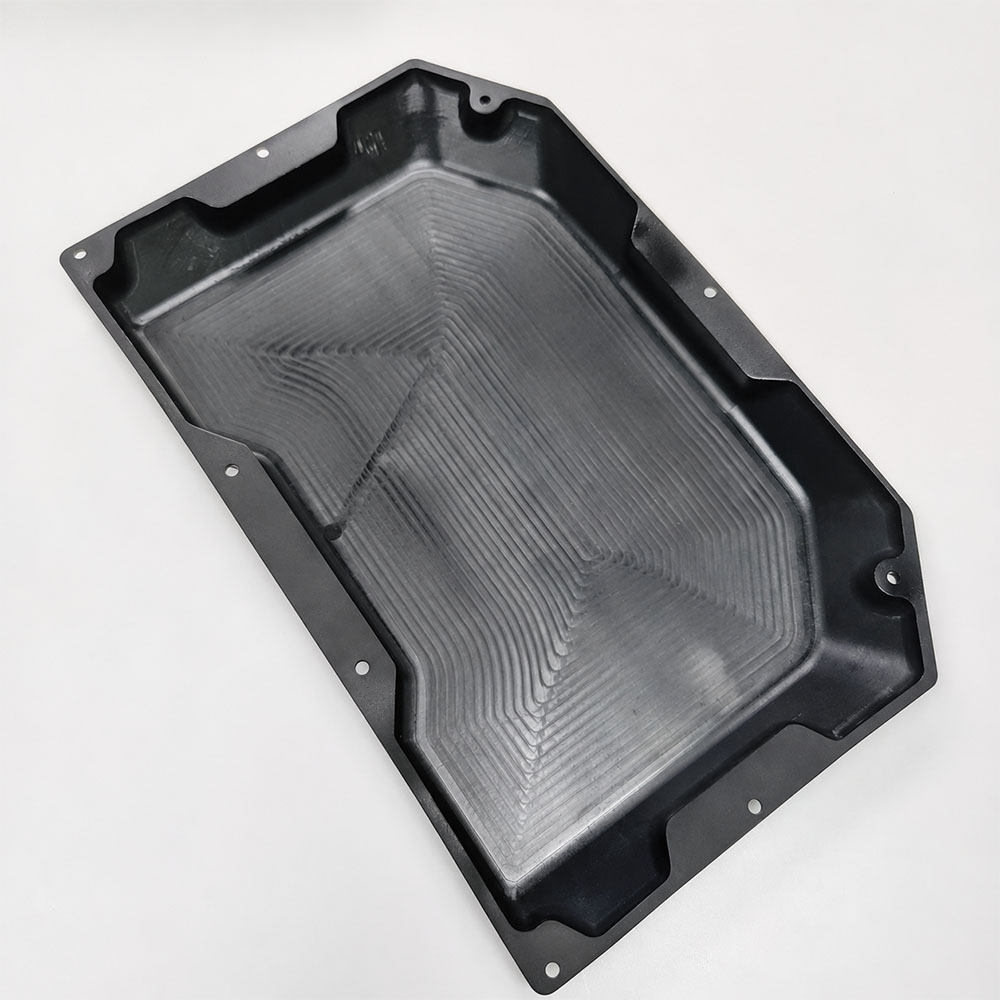
Break-even is the quantity at which total cost under both processes is equal. A workable formula:
Break-even quantity = (tooling cost + molding setup + one-time tooling revisions − CNC setup) ÷ (CNC unit cost − molded unit cost)
Published rules of thumb range from a few hundred to several thousand parts. That spread exists because the underlying part size, complexity and tooling assumptions differ. Use your own quotes instead.
The table below uses hypothetical numbers for arithmetic illustration only. They are not market data or Nova pricing. Results are rounded up to whole parts.
| Scenario | Tooling | Other one-time cost | CNC unit price | Molded unit price | Break-even |
|---|---|---|---|---|---|
| Baseline | $12,000 | None | $28.00 | $2.40 | ~469 parts |
| Tool needs one revision after T1 samples | $12,000 | $1,500 | $28.00 | $2.40 | ~528 parts |
| CNC price drops at larger batches | $12,000 | None | $18.00 | $2.40 | ~770 parts |
| Simpler, lower-cost tool | $6,000 | None | $28.00 | $2.40 | ~235 parts |
Three lessons come out of this arithmetic:
The common advice is “switch once you pass break-even.” That assumption deserves qualification.
Crossing break-even can still be the wrong time to switch. If the design is still changing, the cost of modifying a mold can erase the calculated savings. The mold has to be right as well as cheap. Buyers in this position often do better with a limited-volume molded run. They can run a prototype tool to expose problems that CAD and machined parts do not show.
Staying with CNC beyond break-even can be correct in some cases:
The correct question is not “have we passed break-even?” It is “will we recover the tooling investment before the design or demand changes?”
Break-even math is the financial test. These operational signals usually appear first:
A part designed for CNC is rarely ready for a mold as-is. Machining removes material from a solid block, so designers can use thick sections, deep pockets and sharp internal corners freely. Molding fills a cavity with melt that must flow, cool and release.
Thick sections cool more slowly and shrink more, which leads to sink marks, voids and warpage. Cooling time grows faster than linearly with wall thickness. A common engineering rule of thumb has cooling time increasing roughly with the square of thickness, so thickness drives cycle time and unit cost. MIT OpenCourseWare’s injection molding lecture notes advise keeping parts thin and uniform and holding nominal wall within ±10%.
For parts with thick machined blocks, the usual fix is to core out the mass and add ribs for stiffness instead of thickness. Our injection molding wall thickness DFM guide covers how wall thickness interacts with flow, packing, cooling and cycle time.
Machined walls can be perfectly vertical. Molded walls need draft so the part releases from the tool. Undercuts that a five-axis mill reaches easily may need slides, lifters or inserts in a mold, which adds cost and maintenance. Sharp internal corners concentrate stress in molded plastic and hinder flow. Gate location, ejector pins and parting-line position will leave marks, so decide early which surfaces are cosmetic.
Machined plastic parts are cut from extruded, cast or compression-molded stock. Molding uses a resin grade formulated for melt flow. The grade names may match, but properties, shrinkage, surface appearance and sometimes strength do not. Some materials commonly machined do not convert directly:
Do not assume the molded part will perform like the machined one. Ask the supplier to recommend a molding-grade equivalent, and validate it with T1 samples against the functional test.
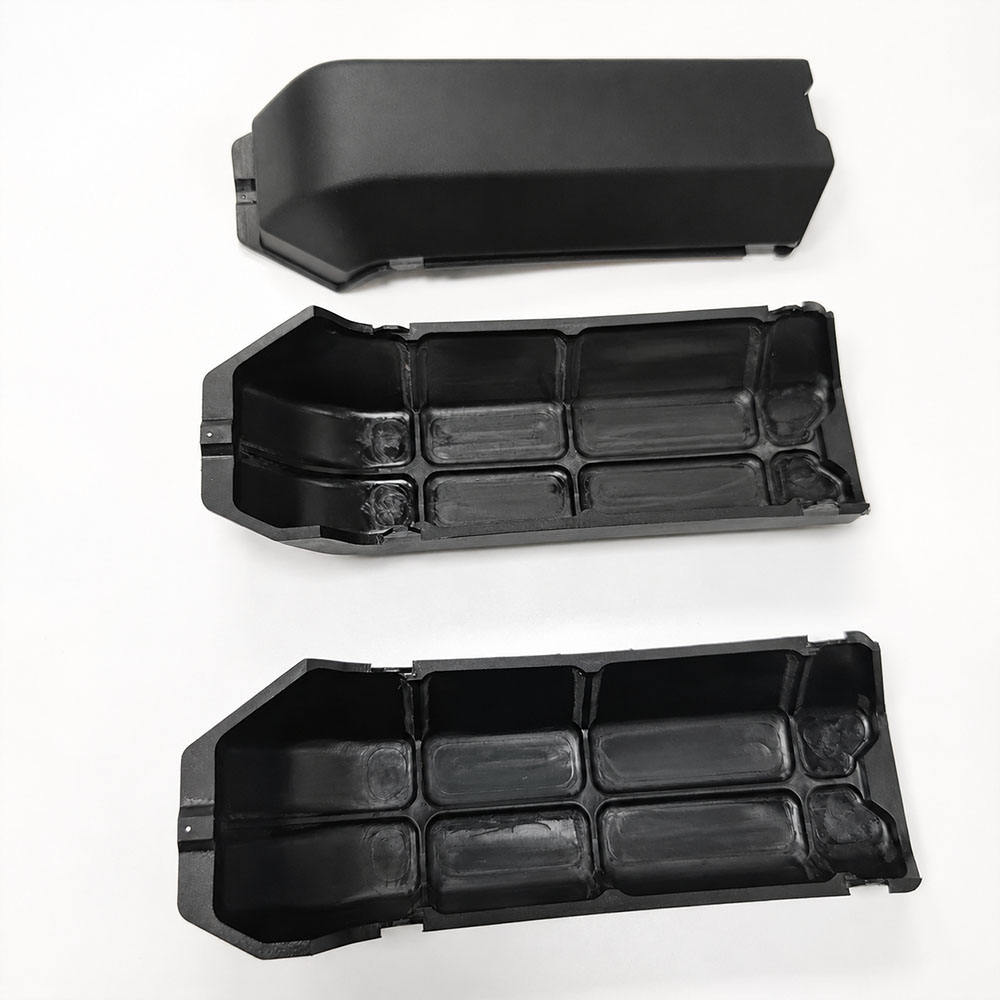
Molded plastic dimensions move with material shrinkage, processing conditions, geometry and cooling. ISO 20457:2026, edition 2 of the standard for plastic molded part tolerances, states that tolerance approaches developed for metal parts cannot generally be applied directly to plastics. The standard also notes that overly tight tolerances can raise scrap and cost, and that tolerances that are too loose can compromise fit and function. Edition 1 (ISO 20457:2018) has been withdrawn.
In practice:
This table is qualitative. Use your own quotes for numbers.
| Decision factor | CNC machining fits better when | Injection molding fits better when |
|---|---|---|
| Design maturity | Design is still changing; frequent revisions | Design is frozen or nearly frozen |
| Quantity | Low volume, one-off or irregular orders | Repeat demand above your calculated break-even |
| Upfront cost | You want to avoid tooling investment | You can fund tooling and amortize it |
| Unit cost trend | Unit cost stays relatively flat as volume rises | Unit cost falls sharply after tooling |
| First-part lead time | You need parts fast, with no tooling lead time | You can wait for tool build and T1 approval |
| Material | Material is only available as stock, or is hard to mold | A molding-grade resin meets the requirements |
| Geometry | Deep pockets, thick sections, complex internal features | Uniform walls, draft, features achievable with the tool |
| Tolerance | Tight tolerance on many features | Tolerances set by function; critical features planned (or machined after molding) |
| Consistency | Small lots with inspection per part | Large lots needing validated process control |
| Waste | Machining waste is acceptable | Material waste matters at volume |
The switch is rarely one jump. Matching tool investment to design maturity and demand confidence reduces risk.
| Stage | Typical situation | Tooling approach | Main risk to manage |
|---|---|---|---|
| Design still evolving | Needs functional testing, several revisions | Keep CNC, or use prototype molding | Overbuilding a tool for a design that changes |
| Design near-final, demand uncertain | Pilot builds, market test | Prototype or lower-commitment tooling | Underbuilding if demand grows quickly |
| Design frozen, demand proven | Repeat orders, long program | Production tooling | Tool wear, cavity count, maintenance |
The Plastics Industry Association (formerly SPI) established a five-class SPI mold classification system, from Class 101 to Class 105. It defines how long a mold is expected to run and how it is built. Published cycle ratings and steel specifications vary between references. When requesting quotes, state the target class and expected program volume, then ask the supplier to confirm cycle life, steel, runner type and cavity count in writing. Compare quotes on the same specification, not on price alone.
For long programs, production molding decisions include cavity strategy, cold versus hot runner, wear-sensitive components, and maintenance. A mold intended for occasional batches can be built differently from one for sustained high output.
Beyond tooling price and unit cost, include:
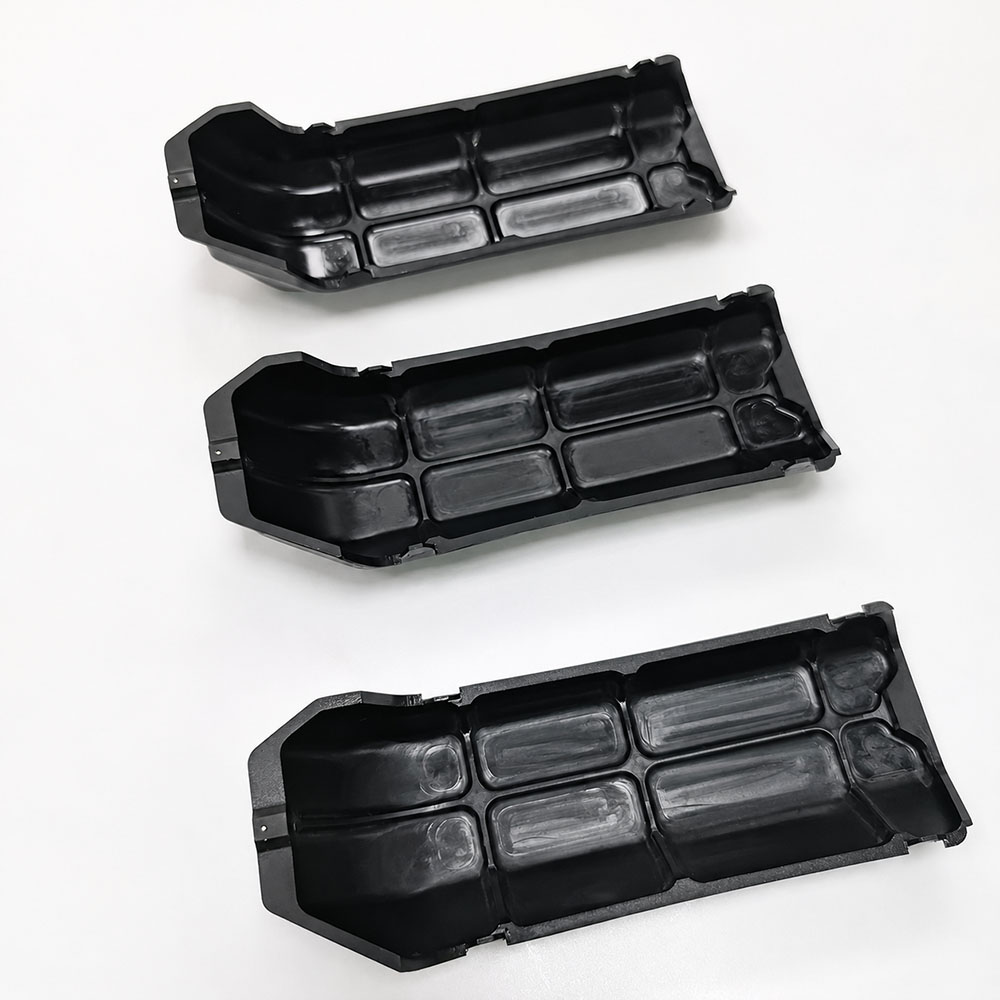
A complete package lets a supplier compare both processes honestly. Include:
Request a DFM review and a break-even comparison on your own quotes. A supplier that offers both CNC machining and injection molding can compare the two processes against the same drawing without a process bias. Ask for a written DFM review that flags draft, undercuts, wall thickness, gate location and tolerance risks before any tooling is cut. A supplier proposing to cut tooling without that review is skipping the step that protects you most.
There is no universal number. Divide tooling and one-time costs by the per-part saving between CNC and molding. Published rules of thumb span hundreds to thousands of parts, so calculate using quotes for your part.
It is risky. Changes after tool cut cost money and time, and adding steel back is harder than removing it. Consider continued CNC machining or prototype molding until the design is stable.
Not automatically. Machined parts come from stock, while molded parts use a molding-grade resin with different shrinkage and properties. Validate T1 molded samples against your functional requirements before production release.
Generally not across every feature. Molded dimensions depend on shrinkage, geometry and processing. ISO 20457 provides a plastics-specific tolerance framework. Critical features may need machining after molding.
Both are common machining materials but generally not processed by conventional injection molding. A molded program may need a different material, so confirm the alternative and re-validate the application.
Use limited-volume molding with prototype tooling to test real molded parts and expose design problems. Move to production tooling once design and demand are stable and break-even is credible.
Compare on the same specification: mold class, steel, cavity count, runner type, expected cycle life, T1 samples, revision terms and tool ownership. A lower price may reflect a shorter-life tool.
