Before You Go, Let’s Talk About Your Parts
Tell us about your part, quantity, and key requirements. Nova Precision Manufacturing Co.,Ltd can help you choose suitable materials and manufacturing processes for your project.

Order dimensionally stable acetal components for gears, bushings, bearings, rollers, guides, valves, insulators, and precision mechanisms. Nova Precision Manufacturing Co.,Ltd supports CNC milling, turning, drilling, routing, and injection molding in POM-H, POM-C, filled, and application-specific grades.
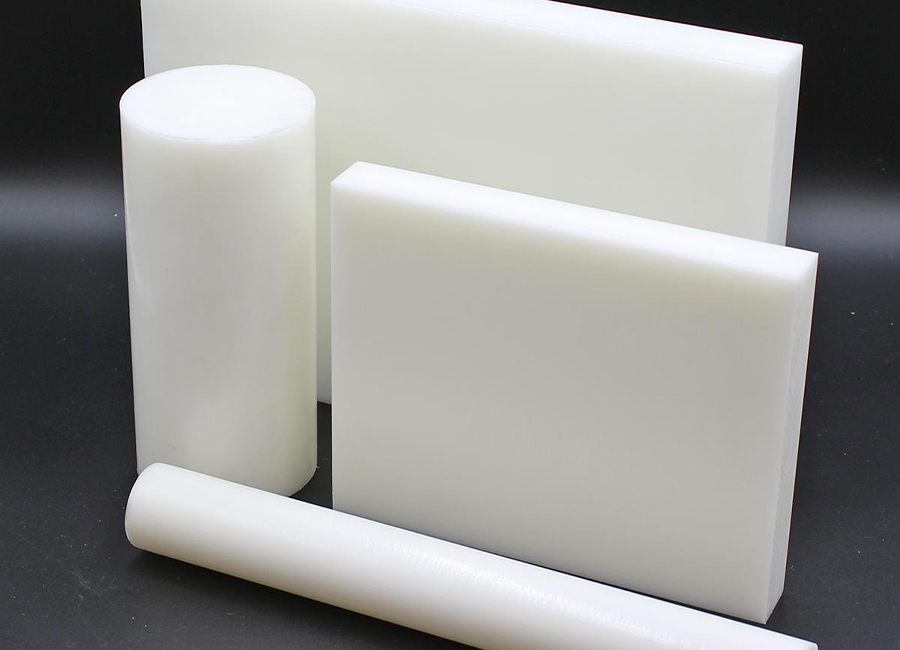
Acetal, also known as polyoxymethylene or POM, combines stiffness, low friction, wear resistance, low moisture absorption, and clean machinability. It is widely used for moving components and precision parts that need consistent dimensions in wet or dry operating conditions.
Acetal and POM are material-family names. Delrin® is a branded acetal homopolymer, commonly classified as POM-H. When a project requires Delrin rather than general acetal, the drawing should identify the exact grade or clearly permit an approved equivalent.
Machined parts can be produced from sheet, plate, rod, or tube, while injection-molded parts require a suitable molding resin. Production method, quantity, stock size, wall thickness, surface condition, and material documentation should be considered before selecting the grade.
Low moisture absorption helps POM maintain dimensions better than many nylons, but it is still affected by thermal expansion, creep, internal stock stress, clamping, and unbalanced material removal. These factors matter for flat plates, thin walls, press fits, and close-tolerance bores.
POM-H generally provides higher strength, stiffness, hardness, fatigue resistance, and creep resistance than standard copolymer acetal. It is suited to loaded gears, mechanical linkages, rollers, fasteners, bushings, and precision parts requiring good wear performance and dimensional control.
Request a QuotePOM-C offers a balanced combination of toughness, machinability, low friction, and chemical resistance. It is often preferred for valves, manifolds, pump components, food-processing equipment, and parts exposed to hot water or cleaning agents. Compliance must be confirmed for the selected stock grade.
Glass reinforcement increases stiffness, creep resistance, and dimensional stability under load. It can support structural brackets, carriers, housings, and components exposed to elevated service temperatures. Fiber content can reduce impact performance and increase tool or mating-surface wear, so it should be selected for a defined requirement.
Lubricated and PTFE-filled grades are designed to reduce friction, wear, noise, and stick-slip behavior. Typical applications include bearings, bushings, slide blocks, guides, thrust washers, and moving assemblies. Load, speed, mating material, surface finish, lubrication, and operating temperature should be reviewed together.
Separate POM formulations are available for static dissipation, food contact, potable water, metal detection, laser marking, or specified colors. One specialty grade does not automatically meet every requirement. State the target electrical range, regulation, color, traceability, and certificate requirements before quotation.
POM-H, POM-C, glass-filled, lubricated, and static-dissipative materials are not direct substitutes. Modifiers can change stiffness, impact strength, wear behavior, thermal expansion, electrical properties, color, and machining response. Molded resin and machined stock shapes may also carry different specifications.
Provide the 3D model and 2D drawing with quantities, tolerances, fits, operating environment, mating components, expected service life, and required documentation. We will review stock condition, tool access, wall balance, clamping, heat control, burr removal, and whether a staged machining process is needed.