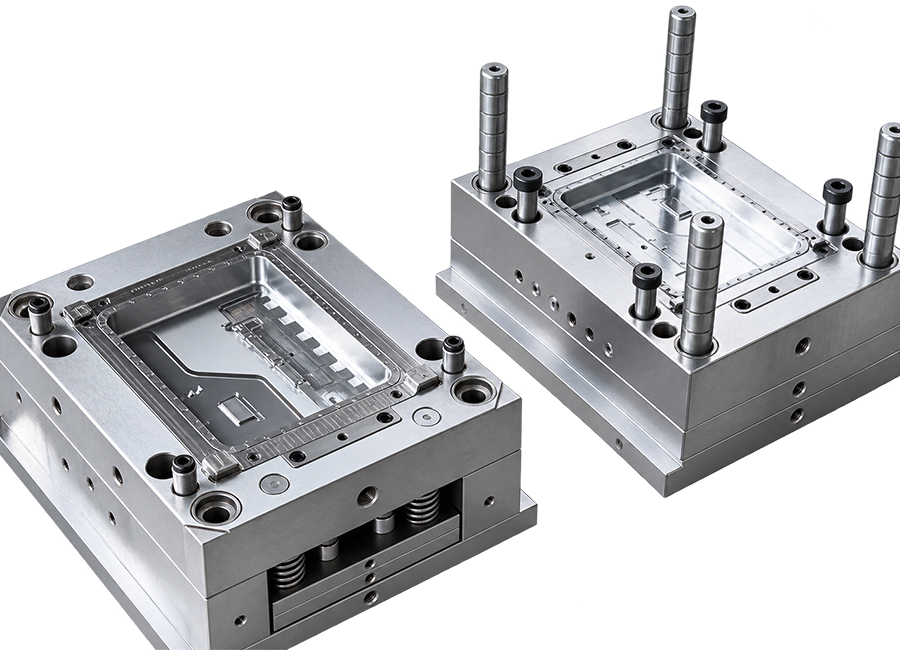
Injection Molding Services for Custom Plastic Parts

Custom injection molding for prototypes, low-volume production, and repeat manufacturing. From DFM and mold tooling to molded plastic parts, we support a wide range of materials, geometries, and production requirements.

Wide Material Range
Engineering Plastics & Elastomers
Prototype → Production
Flexible Manufacturing Support
7
Specialized Molding Services

How We Support Injection Molding Projects

Nova Precision Manufacturing Co.,Ltd supports injection molding programs from early design review through tooling and sample validation, helping align part geometry, material selection, mold construction, and production requirements before manufacturing begins.

Design & Tooling Support

Review CAD models, drawings, material requirements, tolerances, wall thickness, draft, ribs, bosses, and undercuts before tooling.
Define mold construction, cavity layout, gate locations, parting lines, ejector strategy, and other tooling requirements based on the part design and expected production volume.
Produce and evaluate initial T1 samples before releasing the mold for repeat production.

Our Injection Molding Project Workflow

From initial CAD review to production molding, Nova Precision Manufacturing Co.,Ltd follows a structured process to align part design, material, tooling, sample approval, quality requirements, and repeat production.
1

Project Requirements

Submit CAD files, drawings, material, quantity, tolerances, surface requirements, color, and other critical specifications.
2

DFM & Feasibility Review

Review wall thickness, draft, ribs, bosses, undercuts, tolerances, gate locations, parting lines, and overall moldability.
3

Mold Design & Tooling

Define cavity layout, mold structure, runners, gates, cooling, ejectors, slides, inserts, and tooling requirements before mold manufacturing.
4

T1 Samples & Approval

Produce initial T1 molded samples for dimensional, cosmetic, assembly, material, and functional evaluation before production release.
5

Process Validation

Confirm molding parameters, critical dimensions, appearance, fit, inspection points, and approved production references.
6

Production Molding

Run approved molds under controlled processing conditions for low-volume, repeat, or production quantities.
7

Inspection & Delivery

Inspect finished parts against approved requirements, complete required secondary operations, pack, and prepare orders for shipment.

Injection Molding Design & Engineering Guidelines

Successful injection molding starts with a part designed around material behavior, mold construction, filling, cooling, and ejection. Review the key design factors below before tooling to improve moldability, part consistency, and production efficiency.
  • Material Selection:Choose the resin based on strength, temperature resistance, chemical exposure, flexibility, appearance, shrinkage, and end-use requirements.
  • Wall Thickness & Draft:Use practical, consistent wall thickness and adequate draft to support reliable filling, cooling, and part ejection.
  • Ribs, Bosses & Undercuts:Design structural features with molding in mind and identify undercuts that may require slides, lifters, inserts, or other mold actions.
  • Gates, Parting Lines & Ejection:Consider gate placement, parting lines, ejector locations, and core-cavity orientation early so they do not interfere with critical or cosmetic surfaces.
  • Tolerances & Surface Finish:Define critical dimensions and visible surfaces clearly so tooling, molding conditions, texture, and inspection requirements can be planned accordingly.

Who We Support with Injection Molding

Injection molding requirements change as a product moves from development to production. We support engineering, product, manufacturing, and sourcing teams with molding solutions aligned to part performance, tooling strategy, volume, quality, and supply requirements.

Product Development Teams

Need production-material parts to validate geometry, assembly, appearance, and performance before committing to larger-scale manufacturing. We support DFM, prototype tooling, T1 samples, and design iterations before production release.

OEMs & Brand Owners

Need custom molded parts that meet defined material, appearance, assembly, and product requirements while remaining suitable for repeat manufacturing and future production programs.

Engineering & Manufacturing Teams

Need moldable designs, controlled dimensions, reliable material performance, and consistent parts for integration into equipment, electronics, automotive, medical, or other engineered products.

Procurement & Supply Chain Teams

Need clear quotations, tooling ownership information, approved material specifications, production planning, inspection requirements, packaging, and dependable support for repeat orders.

Built for Repeatable Injection Molding Production

Once a molded part is approved, repeat production depends on more than the mold itself. We keep key part, material, tooling, process, and inspection requirements aligned to support consistent manufacturing across future production runs.
Approved CAD, drawing and revision references
Defined resin, color and approved sample requirements
Critical dimensions and inspection points identified before production
Tooling, process and production records maintained for repeat orders

The Team Behind Every Injection Molding Project

Successful injection molding requires coordination across part design, mold engineering, process control, quality, and production. Our team works across these functions to keep tooling and molded-part requirements aligned from development through repeat manufacturing.
Project Management
Coordinates drawings, material specifications, quantities, schedules, revisions, tooling requirements, and communication throughout the project.
DFM & Mold Engineering
Reviews wall thickness, draft, ribs, bosses, undercuts, gates, parting lines, cavity layout, and other features that affect moldability and tooling.
Tooling & Moldmaking
Translates the approved tooling strategy into mold components, cores, cavities, inserts, slides, cooling, ejection, and final mold assembly.
Process Engineering
Establishes molding parameters for filling, packing, cooling, ejection, and cycle repeatability as the mold moves from sampling into production.
Quality & Inspection
Verifies critical dimensions, appearance, material and project-specific requirements using defined inspection points and approved production references.
Production & Logistics
Coordinates production quantities, secondary operations, packing, labeling, shipment requirements, and repeat-order scheduling.

Common Questions About Injection Molding Services

Answers to common questions about injection molding, materials, tooling, prototypes, production, and project requirements.
What is included in your injection molding services?
Our services can support DFM review, mold design and tooling, T1 sampling, production molding, inspection, and project-specific secondary operations from prototype development through repeat manufacturing.
Yes. Tooling and molding strategies can be selected for prototype validation, low-volume production, bridge production, or repeat manufacturing based on part requirements and expected quantities.

A 3D CAD model is the best starting point. Include a technical drawing when critical tolerances, material grades, surface requirements, colors, inserts, or other specifications need to be controlled.

What materials can be injection molded?
Common options include ABS, PC, PC/ABS, Nylon, POM, PP, PE, TPE/TPU, PBT, PPS, PEI, and other engineering thermoplastics depending on performance and application requirements.
Prototype tooling prioritizes faster validation and lower initial tooling investment, while production tooling is designed around longer service life, repeatability, production efficiency, and higher-volume requirements.
Yes. Depending on the part design, we can evaluate insert molding for integrated components, overmolding for multi-material parts, and micro molding for miniature plastic components and fine features.