Before You Go, Let’s Talk About Your Parts
Tell us about your part, quantity, and key requirements. Nova Precision Manufacturing Co.,Ltd can help you choose suitable materials and manufacturing processes for your project.

Order lightweight, chemical-resistant polypropylene components for fluid systems, laboratory equipment, battery assemblies, clips, housings, closures and living-hinge products. Nova Precision Manufacturing Co.,Ltd supports CNC milling, turning, drilling and injection molding in homopolymer, impact copolymer, reinforced, flame-retardant and regulated PP grades.
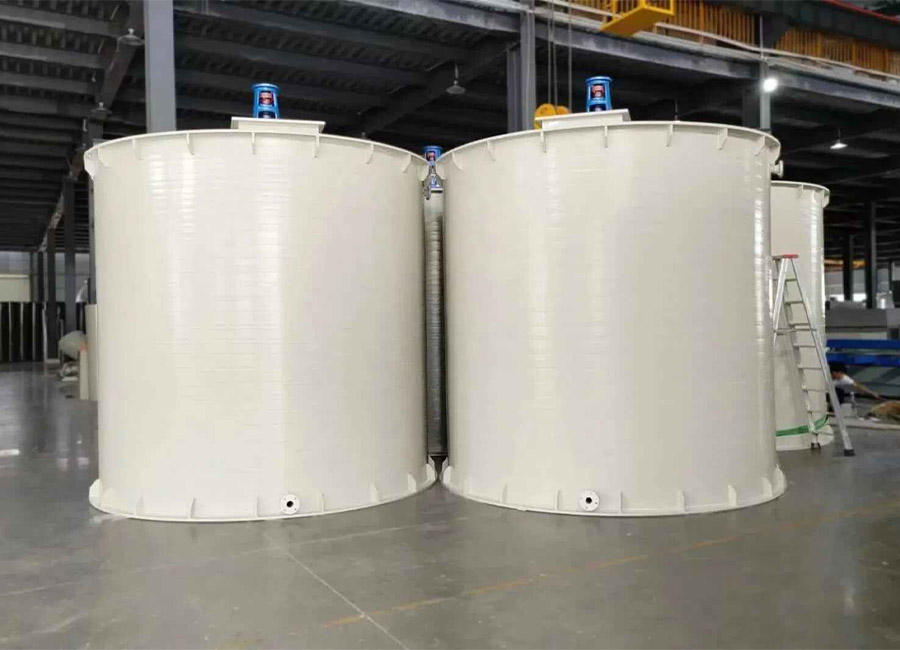
Polypropylene is a lightweight, semi-crystalline thermoplastic with very low moisture absorption, useful chemical resistance and good electrical insulation. Its low density helps reduce component weight and material consumption in both industrial and consumer applications.
PP is used for chemical tank fittings, manifolds, pump components, laboratory trays, battery parts, caps, clips, housings and food or medical equipment. Its resistance to repeated flexing also makes it one of the most common materials for injection-molded living hinges.
CNC machining from PP sheet, plate or rod suits prototypes, replacement parts and lower-volume components. Injection molding supports larger quantities and integrated features such as hinges, snap fits, ribs, bosses and closures without requiring separate assembly hardware.
PP has lower stiffness than many engineering plastics and can creep under sustained load. It also has relatively high molding shrinkage and thermal expansion. Standard grades may perform poorly in prolonged UV exposure or low temperatures, while low surface energy makes painting and adhesive bonding difficult.
PP homopolymer provides higher stiffness and strength than many copolymer grades while retaining low weight, chemical resistance and weldability. It is commonly used for chemical tanks, manifolds, equipment panels, laboratory components and machined industrial parts. Low-temperature impact requirements should be reviewed before selection.
Discuss PP Homopolymer PartsImpact copolymer PP contains an elastomeric phase that improves toughness and resistance to mechanical shock, particularly at lower temperatures. It suits crates, guards, housings, automotive components and frequently handled products. Increased impact performance may be accompanied by lower stiffness, surface hardness or heat capability.
Glass reinforcement increases stiffness, strength, creep resistance and dimensional control. Glass-filled PP can replace heavier materials in brackets, carriers, equipment housings and automotive structures. Fiber orientation affects shrinkage and warpage, while the reinforcement may reduce impact strength and increase machining-tool wear.
Flame-retardant PP is considered for electrical enclosures, battery carriers, connectors and transportation components requiring defined flammability performance. Standard PP is combustible, so the exact UL or industry rating, tested thickness, color and additive system must be confirmed before material approval.
Selected PP grades provide controlled purity, regulatory documentation and sterilization compatibility for food equipment, laboratory products, trays, diagnostic parts and medical-device components. Food-contact or healthcare approval is not universal. Resin traceability, additives, colorants, sterilization method and change-control requirements should be defined.
PP grades with similar names can have different stiffness, impact behavior, shrinkage and chemical performance. Fluid concentration, temperature and exposure time should be provided for chemical applications. Long-term load and temperature must also be considered because creep can affect fastening points, seals and unsupported sections.
For molded parts, uniform walls, gate position, material-flow direction and balanced cooling help control shrinkage and warpage. Resin should flow through a living hinge in the intended direction to support fatigue performance. Machined PP requires controlled clamping and cutting heat because thin or unsupported features can flex.