Before You Go, Let’s Talk About Your Parts
Tell us about your part, quantity, and key requirements. Nova Precision Manufacturing Co.,Ltd can help you choose suitable materials and manufacturing processes for your project.

Source dimensionally stable, electrically insulating PPE/PS parts for electrical, water-management and thermal assemblies. Nova Precision Manufacturing Co.,Ltd provides CNC machining from modified PPE stock and injection molding in application-matched grades, supporting prototypes, low-volume orders and production components.
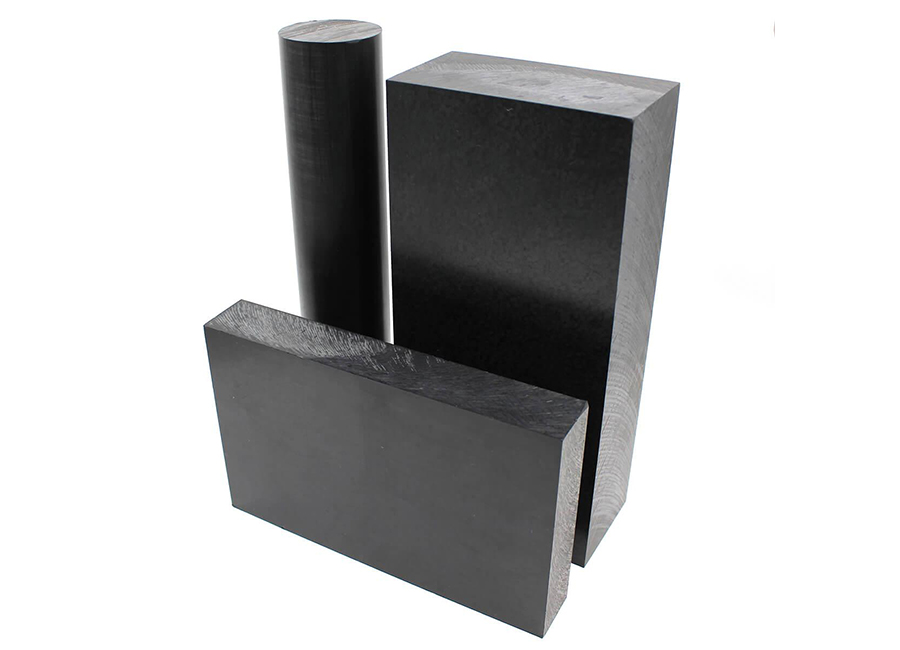
PPE/PS is an amorphous engineering blend of polyphenylene ether and polystyrene. It combines the heat resistance, dielectric performance and hydrolytic stability associated with PPE with the processing advantages of a modified polymer blend.
Low moisture absorption helps components retain dimensions and electrical properties as humidity changes. Common applications include switchgear housings, terminal supports, connectors, pump components, water-meter internals, HVAC parts, appliance structures and fluid-control assemblies.
CNC machining is suitable for prototypes, replacement components and lower-volume parts made from PPE/PS sheet, plate or rod. Injection molding is generally preferred for repeated production involving housings, complex ribs, bosses, clips and integrated fastening features.
PPE/PS is a material family rather than a single specification. Heat resistance, impact behavior, flame rating, reinforcement and water-contact approvals vary by manufacturer and grade. Final selection should therefore follow the operating environment and required documentation.
Unreinforced grades provide a balanced combination of dimensional stability, impact strength, electrical insulation and surface quality. They suit equipment housings, terminal blocks, brackets, pump covers and other components that need dependable performance without added reinforcement.
Discuss General-Purpose PPE/PSHigh-heat formulations retain greater stiffness when exposed to elevated temperatures. They are considered for appliance structures, hot-air equipment, HVAC assemblies and components near motors or power electronics. Grade selection should account for temperature, load and exposure duration.
Flame-retardant grades are used for switchgear, electrical enclosures, power-distribution components, chargers and battery assemblies. Specify the required UL 94 classification, minimum tested wall thickness and color. Non-halogen flame-retardant performance must be confirmed for the exact grade.
Glass reinforcement increases stiffness, improves creep resistance and can reduce thermal expansion. These grades support structural carriers, pump frames and dimension-sensitive assemblies. Fiber direction, surface finish, impact requirements and added tool wear should be reviewed before production.
Selected grades are developed for valves, filtration components, water-meter internals, pump parts and hot-water connections. Potable-water or food-contact suitability applies only to documented grades, colors and manufacturing locations, not to every PPE/PS formulation.
Provide the following information for material and manufacturability review:
Names such as modified PPE, PPO/PS and NORYL are commonly used for related materials, but they do not define identical performance. Additives and reinforcement can change flow, impact resistance, heat capability, shrinkage and compliance status.
For molded parts, Nova reviews wall uniformity, ribs, bosses, draft, gate position, venting, knit lines and cooling balance. For machined components, we assess stock form, material removal, heat control, workholding and thin-wall stability before establishing the manufacturing plan.