Before You Go, Let’s Talk About Your Parts
Tell us about your part, quantity, and key requirements. Nova Precision Manufacturing Co.,Ltd can help you choose suitable materials and manufacturing processes for your project.

Source strong, wear-resistant alloy steel components for prototypes and production. Nova Precision Manufacturing Co.,Ltd supports CNC machining and metal part production using 4130, 4140, 4340, 8620, and selected tool steels, with material condition, hardness, heat treatment, finish, and inspection requirements defined before manufacturing.
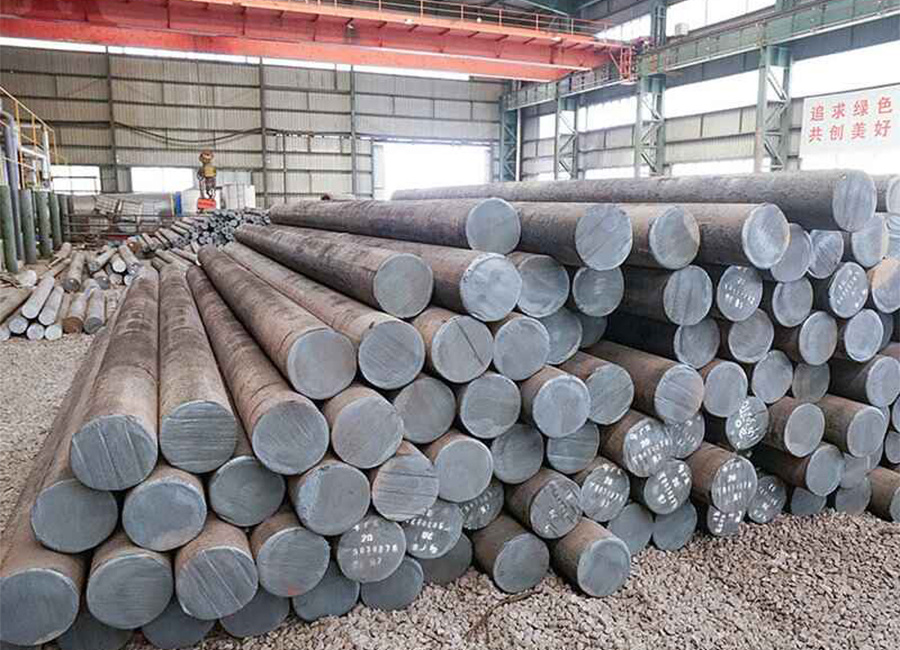
Alloy steels use controlled additions of chromium, molybdenum, nickel, and other elements to achieve greater hardenability, strength, fatigue resistance, toughness, or wear performance than plain low-carbon steel. They are commonly selected for parts that transmit torque, carry repeated loads, or resist impact.
Nova Precision manufactures alloy steel parts through CNC milling, turning, drilling, laser cutting, metal fabrication, and secondary grinding. Heat treatment, plating, coating, and hardness verification can be coordinated when required by the drawing and confirmed during quotation.
The delivery condition is as important as the grade. Annealed, normalized, pre-hardened, and quenched-and-tempered material can have very different machinability, hardness, dimensional stability, and mechanical performance. The required condition should be specified before material procurement.
Most alloy steels still require protection from oxidation. Depending on the application, available options can include black oxide, phosphate coating, zinc or nickel plating, electroless nickel plating, powder coating, or painting. Carburizing, nitriding, hardening, and tempering address surface hardness, wear, or core properties rather than appearance alone.
A chromium-molybdenum steel offering a useful balance of strength, toughness, machinability, and better weldability than higher-carbon grades. Common applications include structural fittings, frames, mounts, pressure components, and moderately loaded mechanical parts.
A versatile chromium-molybdenum alloy with greater strength and hardenability than 4130. It is commonly used for shafts, axles, spindles, gears, high-strength bolts, molds, fixtures, and parts exposed to impact or torsional loads.
A nickel-chromium-molybdenum steel capable of very high strength and toughness after suitable heat treatment. Typical uses include heavy-duty shafts, high-load gears, aerospace fittings, power-transmission parts, and components exposed to impact and fatigue.
A low-carbon alloy steel that can develop a wear-resistant outer case while retaining a tougher core. It is frequently selected for gears, pinions, splines, camshafts, pins, and other parts with rolling or sliding contact.
A2 and O1 are cold-work tool steels used for punches, dies, gauges, cutting tools, and wear components. A2 is air-hardening and generally offers better dimensional stability during heat treatment, while O1 is oil-hardening and is often selected for general-purpose tooling. Specify the exact grade, target hardness, and heat-treatment route in the RFQ.
A grade name is only the starting point. Annealed 4140, pre-hardened 4140, and quenched-and-tempered 4140 can machine and perform differently. Hardness, section size, stock form, and heat-treatment condition influence cutting parameters, tool wear, distortion, surface finish, and final mechanical properties.
Provide the CAD model and drawing together with load, impact, fatigue, wear, welding, hardness, case-depth, coating, and critical-dimension requirements. Our team can review machining allowances, grinding stock, datum strategy, thread protection, and inspection after heat treatment before preparing the quotation.