Before You Go, Let’s Talk About Your Parts
Tell us about your part, quantity, and key requirements. Nova Precision Manufacturing Co.,Ltd can help you choose suitable materials and manufacturing processes for your project.

Source lightweight, corrosion-resistant titanium parts for aerospace, medical-device, marine, chemical-processing, and industrial applications. Nova Precision Manufacturing Co., Ltd. supports CNC machining, Swiss-type turning, sheet-metal fabrication, and secondary finishing in Grade 2, Grade 5 (Ti-6Al-4V), and project-specific titanium grades.
Titanium combines low density with high strength, corrosion resistance, fatigue performance, and useful temperature capability. These properties support aircraft hardware, medical-device components, marine equipment, chemical systems, and applications where both weight and service environment matter.
Nova Precision produces titanium components from bar, plate, sheet, and tube through milling, turning, drilling, precision cutting, forming, and secondary operations. The production route depends on grade, condition, geometry, quantity, and joining requirements.
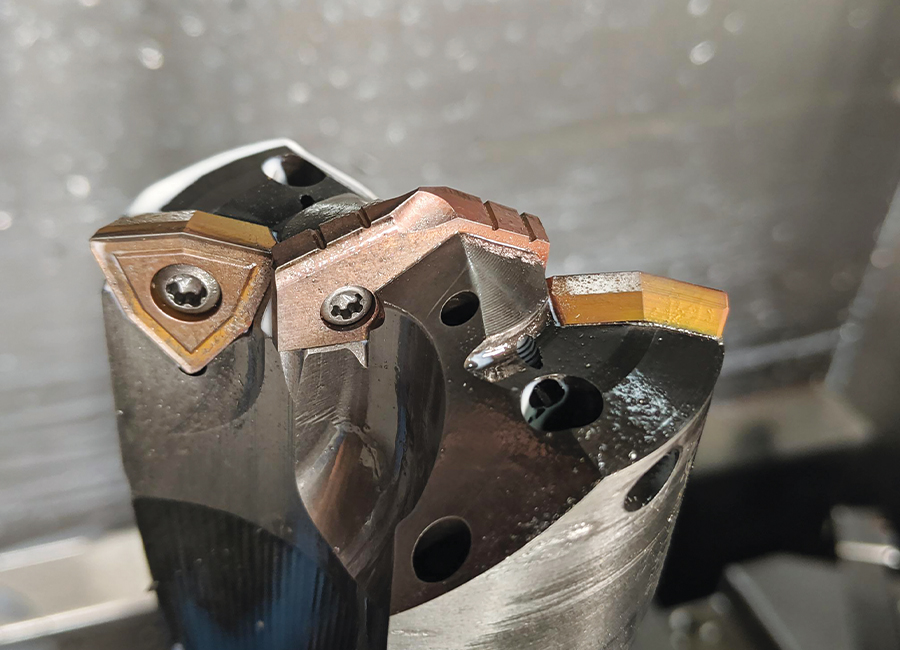
Titanium’s low thermal conductivity concentrates cutting heat near the tool. Its strength and tendency to work harden or gall also increase tool wear. Rigid workholding, sharp tooling, stable chip load, cooling, and accessible geometry help control cost and quality.
Finishes can include as-machined, bead-blasted, tumbled, polished, titanium-anodized, PVD-coated, or specification-controlled cleaning. Because preparation affects texture, color, fatigue-sensitive edges, and dimensions, cosmetic and functional surfaces should be marked on the drawing.
Grade 2 offers moderate strength, excellent corrosion resistance, ductility, formability, and weldability. It is used for heat exchangers, chemical-processing equipment, marine hardware, pumps, valves, and formed assemblies where corrosion performance matters more than maximum strength.
Request a QuoteGrade 5 is the most widely used titanium alloy for high-performance machined parts. Ti-6Al-4V balances strength, fatigue resistance, low weight, and corrosion resistance for aerospace brackets, structural fittings, fasteners, shafts, housings, and heavily loaded industrial components.
Grade 9 provides more strength than commercially pure titanium while retaining better cold formability than Grade 5. Common uses include aerospace tubing, hydraulic lines, welded structures, heat-exchanger tubing, bicycle frames, and other lightweight formed components.
Grade 23 is the extra-low-interstitial version of Ti-6Al-4V, offering improved ductility and fracture-related performance. It is specified for certain medical, cryogenic, and aerospace applications. Safety-critical projects must define the material standard, traceability, cleaning, finishing, and validation requirements.
Grade 7 adds a small amount of palladium to improve resistance in certain reducing-acid environments while retaining useful fabrication characteristics. It is considered for chemical-processing vessels, heat exchangers, piping, pumps, and wetted hardware. Availability and the exact specification are confirmed per project.
A drawing that specifies only “titanium” is incomplete. Changing the grade or condition can alter strength, ductility, corrosion behavior, fatigue response, machining time, stock availability, and certification. Any substitution should be approved against the complete material and application specification.
Provide the 3D model and 2D drawing with quantity, material standard, condition, service environment, loads, finish, and inspection requirements. We will review material utilization, tool access, heat concentration, distortion, galling, burrs, finishing allowance, and measurement strategy before quotation.