Before You Go, Let’s Talk About Your Parts
Tell us about your part, quantity, and key requirements. Nova Precision Manufacturing Co.,Ltd can help you choose suitable materials and manufacturing processes for your project.

Source corrosion-resistant stainless steel components for prototypes and production. Nova Precision Manufacturing Co.,Ltd supports CNC machining, sheet metal fabrication, stamping, laser cutting, welding, and secondary finishing in 303, 304, 316/316L, 17-4 PH, 440C, and other specified grades.
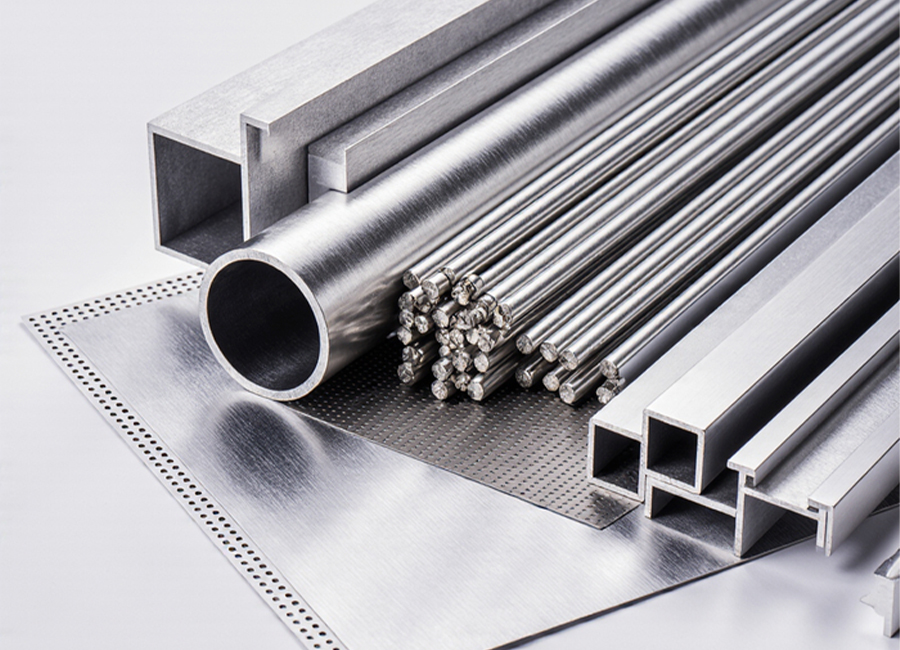
Stainless steel forms a chromium-rich passive surface that helps resist corrosion, but actual performance depends on the grade, surface condition, fabrication method, and operating environment. It is widely used for fittings, valves, fasteners, housings, shafts, process equipment, and cleanable industrial assemblies.
Nova Precision manufactures stainless steel parts through CNC milling and turning, drilling, laser cutting, bending, stamping, welding, and secondary grinding. The manufacturing route is selected around geometry, quantity, mechanical loads, corrosion exposure, appearance, and required documentation.
Austenitic grades such as 304 and 316 can work-harden during machining and retain heat near the cutting edge, increasing tool wear and production time. Precipitation-hardening and martensitic grades require additional control of material condition, hardness, heat treatment, and final dimensions.
Surface options can include as-machined, bead-blasted, brushed, polished, passivated, electropolished, powder-coated, or application-specific finishes. Surface roughness, grain direction, contamination control, weld treatment, masking, and cleanability should be specified before production.
A free-machining austenitic stainless steel for components requiring extensive milling, turning, drilling, or threading. It produces better chips than 304 but offers lower corrosion resistance and weldability. Common uses include shafts, fittings, fasteners, bushings, and precision hardware.
A general-purpose stainless steel offering a strong balance of corrosion resistance, formability, weldability, availability, and cost. It is commonly used for enclosures, brackets, tanks, fasteners, process equipment, and general industrial assemblies.
A molybdenum-bearing grade with better resistance to pitting and corrosion in chloride and chemical environments than 304. The low-carbon 316L version is frequently selected for welded assemblies, fluid-handling parts, marine equipment, and cleanable components.
A precipitation-hardening grade that combines useful corrosion resistance with high strength and hardness after aging. It is suited to shafts, valves, pump components, aerospace fittings, tooling, and heavily loaded precision parts. The required heat-treatment condition should be stated on the drawing.
A heat-treatable martensitic stainless steel capable of high hardness and wear resistance. It is used for bearings, valve components, instruments, cutting parts, and wear surfaces, but provides less corrosion resistance than common 300-series grades.
Stainless steel is a material family—not a single level of corrosion resistance. Grade 303 prioritizes machinability, 304 provides general-purpose performance, 316 improves resistance in many chloride environments, 17-4 PH provides higher strength, and 440C prioritizes hardness and wear resistance.
Thin walls, deep pockets, small internal radii, welded sections, and cosmetic brushed surfaces require process planning because stainless steel can work-harden, distort, and show handling or tooling marks. Share the CAD model, drawing, operating environment, critical dimensions, weld requirements, and surface specification so these risks can be reviewed before quotation.