Before You Go, Let’s Talk About Your Parts
Tell us about your part, quantity, and key requirements. Nova Precision Manufacturing Co.,Ltd can help you choose suitable materials and manufacturing processes for your project.

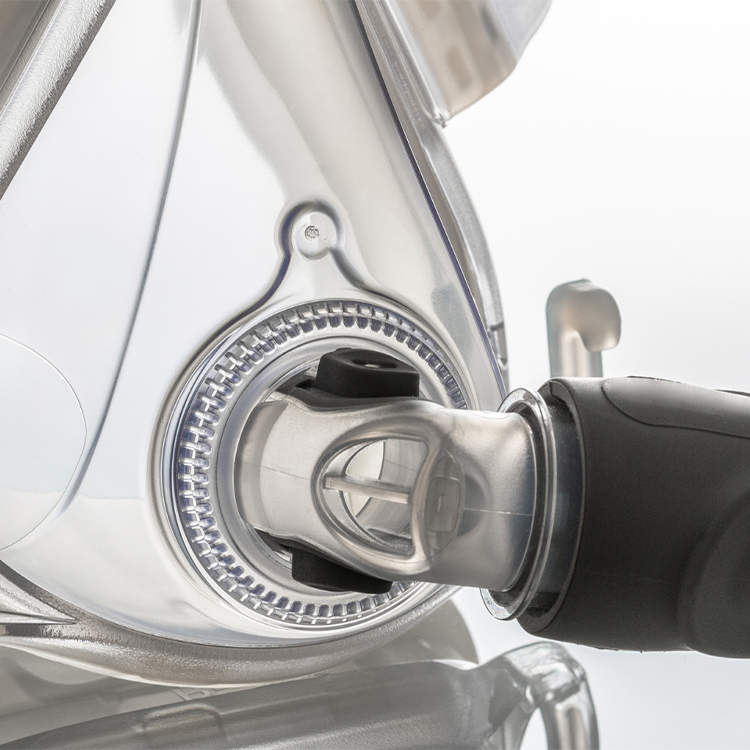
Selecting resin for a medical device housing is not simply a question of strength, price, or molding performance. Repeated exposure to alcohol, bleach, hydrogen peroxide, detergents, wipes, heat, and sterilization cycles can change the equation. This guide examines resin and cleaning compatibility, documented failures, and what engineers should validate before locking a material specification.
A medical device housing can look perfectly acceptable on a CAD screen and still be headed for trouble.
Three inputs matter.
The resin, the cleaner, and the mechanical stress state of the molded component interact over hundreds or thousands of cleaning cycles, which means a polymer that passes an ordinary chemical-resistance chart may still craze, crack, discolor, soften, or lose integrity after repeated real-world exposure.
So why are housings still specified from resin-family names alone?
I would not approve a medical device enclosure merely because the drawing says “PC,” “ABS,” or even “medical-grade plastic.” That description is too vague. The commercial resin grade, additives, pigment, molding conditions, residual stress, cleaner formulation, concentration, temperature, dwell time, wiping method, sterilization method, and expected number of cycles all matter.
That is especially relevant for diagnostic equipment, patient monitors, laboratory devices, pump housings, instrument bodies, control panels, and reusable equipment. Nova’s own medical device parts manufacturing guidance correctly treats resin grade, disinfectants, sterilization method, body contact, and cleaning requirements as defined engineering inputs rather than afterthoughts.
Engineers tend to separate mechanical and chemical requirements.
That separation is dangerous.
Environmental stress cracking, or ESC, occurs when a susceptible polymer experiences tensile stress while simultaneously contacting a chemical that promotes crack initiation or propagation. Neither factor necessarily causes catastrophic failure alone. Put them together, though, and a seemingly tough housing can develop fine crazing around screw bosses, snap fits, corners, ribs, weld lines, ports, or molded-in inserts.
A 2024 study published in Journal of Hospital Infection tested eight ready-to-use 2-in-1 disinfectant wipes against 13 healthcare plastics under fixed strain. Every wipe formulation contained agents capable of contributing to environmental stress cracking. Formulations with pH above 8.0 accounted for 74% of failures, and 22 of 39 tested plastic specimens visibly cracked under those higher-pH exposures. Read the PubMed study on disinfectant compatibility
That is useful data.
And it demolishes one lazy assumption: knowing the antimicrobial active ingredient is not enough. Two wipes built around quaternary ammonium compounds can contain different amines, alcohols, surfactants, pH modifiers, or other constituents, producing very different outcomes on the same plastic.
The CDC reaches a similar practical conclusion. Its healthcare environmental-cleaning guidance says manufacturers should identify compatible products and warns that 60–80% alcohol can damage some plastics, tubing, silicone, rubber, and adhesives, while chlorine/hypochlorite products bring their own compatibility concerns. CDC material compatibility guidance
“Disinfectant compatible” is therefore not a material property in isolation. It is a system requirement.
There is a particularly instructive FDA record from 2022.
Baxter initiated a correction involving 62,712 MiniCap Extended Life PD Transfer Sets after identifying that cleaning products containing substances including hydrogen peroxide, bleach, alcohol, and certain solvents could damage the products and potentially cause cracking or leakage. Baxter updated the instructions for use to warn against direct contact with those cleaners and solvents. FDA recall record for the Baxter MiniCap transfer set
Read that number again: 62,712 units.
The lesson is broader than that product. Chemical compatibility has to be translated into the actual use environment. A datasheet stating that a polymer has “good chemical resistance” does not establish that the finished component will tolerate a nurse wiping it with a particular commercial disinfectant several times per shift for five years.
There is another useful warning in the FDA’s adverse-event database. A 2025 MAUDE report concerning a Getinge Aquadis 56M washer-disinfector described a cracked plastic door-locking component associated with heat and a strong chemical odor, followed by reported staff symptoms. MAUDE reports do not establish incidence or independently prove causation, so they must be interpreted carefully, but they demonstrate the kinds of failure combinations that engineers need to investigate rather than dismiss.
And that raises the engineering question that matters: what will the finished housing look like after cycle 2,000—not cycle two?
Calling something “medical grade resin” sounds reassuring.
It is incomplete.
A polymer family may contain dozens or hundreds of commercial grades with different molecular weights, fillers, impact modifiers, flame-retardant packages, mold-release agents, colorants, UV stabilizers, flow properties, and regulatory documentation.
Nova’s plastic injection molding material guide makes the same distinction: specifying “ABS,” “PC,” or “nylon” does not adequately define a production resin because reinforcement, modifiers, additives, and grade selection change both processing behavior and final performance.
Here is how I would screen the major candidates for medical device housings before detailed testing.
| Resin | Why Designers Consider It | Cleaning/Sterilization Issue to Screen | Typical Housing Concern | What I Would Validate |
|---|---|---|---|---|
| Polycarbonate (PC) | High impact resistance, dimensional performance, transparency options | Cleaner-induced ESC and crazing, especially when residual or assembly stress is present | Screw bosses, sharp corners, inserts, snap features, transparent windows | Actual resin grade + actual disinfectant + stressed molded coupons |
| PPSU | High toughness, heat resistance, hydrolytic stability, repeated steam capability in suitable grades | Grade-specific chemical compatibility despite strong steam performance | Reusable instruments, sterilizable housings, trays, handles | Steam cycles plus cleaning chemicals, color change, impact retention |
| Polypropylene (PP) | Low moisture absorption, useful chemical resistance, low density | Chemical resistance is generally attractive, but temperature, creep, additives, and grade still matter | Thin housings, hinges, fluid-system enclosures | Cleaner concentration, heat, sustained load, dimensional stability |
| PEI | High-temperature capability, stiffness, electrical performance, healthcare grades available | Sterilization and chemical compatibility vary by exact grade | Instrument housings, electrical medical equipment, reusable components | Exact healthcare grade, sterilization route, chemicals, stress concentration |
| ABS | Good cosmetics, toughness, moldability, comparatively economical | Certain solvents and prolonged chemical exposure can be problematic | External covers, bezels, handheld housings | Repeated wipe exposure, appearance, cracking, printing/coating durability |
This table is a screening tool—not an approval matrix.
That distinction matters because even Nova’s individual material pages repeatedly point back to grade-specific performance. Its polycarbonate material guidance specifically flags molded-in stress, incompatible cleaners, sharp corners, and excessive assembly loads as contributors to cracking and crazing.
For reusable products facing steam, PPSU for sterilizable medical components deserves serious attention because selected grades combine toughness, hydrolytic stability, and repeated sterilization capability. But PPSU is not magically immune to every cleaning chemistry; the exact resin, solvent, additive package, stress level, temperature, and exposure time remain part of the qualification problem.
And where chemical resistance and low moisture absorption lead the specification, polypropylene material options may be worth evaluating. PP brings different trade-offs, including lower stiffness, creep under sustained load, relatively high molding shrinkage, and grade-dependent medical documentation.
There is no universal winner.
PC remains attractive for medical device housings because it is tough, moldable, dimensionally useful, and available in transparent grades.
But PC can punish bad assumptions.
A PubMed-indexed investigation of polymeric medical-device failures found that failures involving materials including polycarbonate were associated not simply with chemical attack, but with environmental stress cracking produced by the interaction between specific chemicals and stress within the polymer. The investigators also identified manufacturing residual stress as an important factor and reported that processes such as annealing could help mitigate certain failures. See the polymeric medical-device failure study
This is why I dislike compatibility tables that contain nothing but green check marks.
A molded PC housing may contain residual stresses around gates, knit lines, corners, thick-to-thin transitions, molded threads, bosses, and inserts. Add fastener preload. Add an interference-fit component. Add a wipe formulation that reaches the area repeatedly.
Now the chemistry test is also a structural test.
The smarter question is not, “Is polycarbonate resistant to alcohol?”
It is: “Does this specific PC grade, molded under our production conditions and assembled at our specified torque, survive the specified alcohol-containing formulation for the required number of exposures without unacceptable crazing, cracking, discoloration, strength loss, or dimensional change?”
That is a specification an engineering team can actually validate.
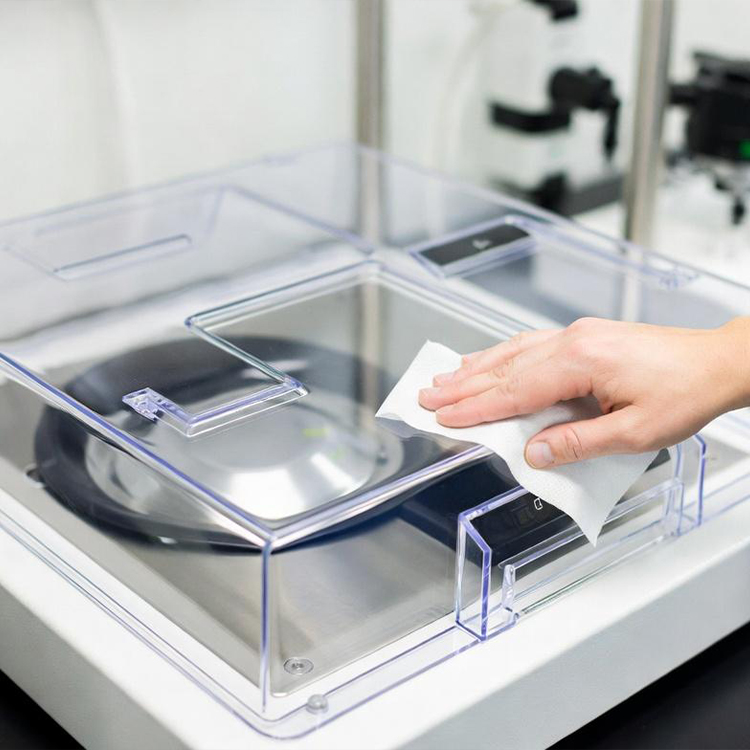
Another source of weak material specifications is sloppy terminology.
Cleaning removes soil. Disinfection reduces or destroys many pathogenic microorganisms. Sterilization targets all viable microorganisms, including bacterial spores under a validated process. The required treatment depends on the intended device use and applicable reprocessing classification.
The FDA describes reusable medical-device reprocessing as a multistep process in which the device is cleaned first and then disinfected or sterilized, depending on its application. FDA overview of reusable medical-device reprocessing
The CDC likewise advises healthcare facilities to verify that detergents and enzymatic cleaners are compatible with the materials used in medical instruments and to inspect surfaces for breaks in integrity that could prevent adequate cleaning or disinfection.
That means the RFQ should not say merely:
“Housing must withstand hospital cleaning.”
Too vague.
A better specification identifies the cleaning agent by commercial product and formulation where possible, active chemistry, concentration, wipe versus immersion, exposure time, frequency, temperature, rinsing requirement, drying method, number of simulated cycles, and acceptance criteria.
Do it early.
Waiting until validation tooling or production launch to discover chemical cracking can turn a material problem into a tooling problem, a labeling problem, a regulatory problem, and an expensive schedule problem simultaneously.
Collect the disinfectants that will actually appear in the device’s instructions for use or in the expected clinical environment.
Do not test generic “alcohol.”
Identify whether the exposure is 70% isopropanol, ethanol, a quaternary ammonium wipe, hydrogen peroxide, sodium hypochlorite (NaOCl), peracetic acid, enzymatic detergent, or a proprietary formulation containing several ingredients.
Also define concentration, pH, exposure duration, temperature, wiping pressure, drying, rinsing, and cycle count.
Testing a generic resin from the same polymer family is weak evidence.
Colorant matters. Flame retardant matters. Filler matters. Mold release can matter. Regrind policy can matter. Even switching from one commercial PC grade to another can alter ESC behavior.
For applications where heat and sterilization are major drivers, the site’s PEI medical and high-temperature material guidance illustrates why the full grade specification matters: healthcare-grade PEI can offer sterilization-related documentation that standard industrial material does not automatically carry.
This is where many compatibility screens become unrealistically easy.
Test unstressed plaques and you may prove very little about a housing with torqued screws, press-fit inserts, snap hooks, ultrasonic welds, molded bosses, or high residual molding stress.
Use molded, production-intent components where practical. At minimum, include stressed specimens and worst-case geometries.
Acceleration is useful only when it represents the same failure mechanism.
Higher temperature, longer dwell, continuous soaking, or extreme chemical concentration may create a mechanism that does not exist during ordinary wiping. Conversely, a gentle room-temperature immersion test can miss the stress concentration responsible for real field cracking.
The test needs an engineering rationale.
“Looks okay” is not an acceptance criterion.
Consider visual crazing, crack length, gloss shift, color change, haze, tensile or impact retention, sealing performance, dimensional shift, fastener pullout, enclosure ingress protection, label adhesion, window transparency, electrical isolation, and functional assembly tests.
Then connect those criteria to device risk.
Resin chemistry gets attention because it produces dramatic failures.
Geometry causes quieter ones.
Deep seams, unsealed joints, recessed fasteners, narrow gaps, sharp internal transitions, textured pockets, poorly drained recesses, and complicated mating interfaces can trap liquid or biological material and make consistent cleaning difficult.
The FDA has explicitly recognized ASTM F3357, Standard Guide for Designing Reusable Medical Devices for Cleanability, noting that design features should minimize debris retention and make contaminants and cleaning-product residues easier to remove. FDA recognition of ASTM F3357
So material selection cannot rescue bad cleanability geometry.
And a beautifully radiused, easily wiped enclosure cannot rescue a resin that cracks after repeated exposure.
You need both.
There is another reason to formalize this work.
On February 2, 2026, FDA’s Quality Management System Regulation (QMSR) became effective, amending 21 CFR Part 820 and incorporating ISO 13485:2016 by reference. FDA also replaced the old Quality System Inspection Technique with its updated inspection process. FDA Quality Management System Regulation overview
I would treat resin and cleaning compatibility as traceable engineering evidence, not informal tribal knowledge.
Record the resin manufacturer and commercial grade. Record the cleaning products and conditions tested. Record specimen conditioning, molded stress state, exposure cycles, acceptance criteria, results, deviations, and material changes.
If the pigment changes later, ask whether qualification still applies.
If the disinfectant changes, ask again.
If the molding supplier changes processing conditions enough to change residual stress, ask again.
That discipline is much cheaper than discovering field cracking after launch.
The best resin for a medical device housing is the exact commercial grade that satisfies the device’s mechanical, chemical, cleaning, sterilization, regulatory, cosmetic, electrical, and manufacturing requirements after validation under realistic use conditions. There is no universally superior medical housing plastic because the exposure profile and device design determine which trade-offs matter.
Polycarbonate may suit impact-resistant or transparent housings. PPSU may be attractive for repeated steam exposure. PP can offer useful chemical resistance. PEI may suit high-temperature electrical or reusable components. ABS can work well in less aggressive environments where appearance and economics matter.
Grade-level testing decides the answer.
Choose resin for a medical device housing by defining the complete use environment first: mechanical load, impact, temperature, disinfectant chemistry, sterilization method, cleaning frequency, body-contact requirements, electrical needs, appearance, service life, production process, and required documentation. Then screen candidate commercial grades and validate production-intent parts under worst-case conditions.
I would choose the cleaner before finalizing the resin whenever possible.
That sounds backwards to some teams. It is not. Cleaning is part of the operating environment.
Plastic medical device housings can crack when cleaning chemicals interact with residual molding stress, assembly stress, sharp geometry, incompatible resin chemistry, elevated temperature, or repeated exposure, producing environmental stress cracking rather than simple chemical dissolution. Cracks often begin near bosses, corners, inserts, snap fits, weld lines, ports, or heavily loaded fasteners.
That is why chemical-resistance tables alone are insufficient.
Polycarbonate can tolerate some healthcare cleaning systems, but compatibility is strongly dependent on the exact PC grade, disinfectant formulation, concentration, exposure time, temperature, residual molding stress, and assembly load, so blanket claims that polycarbonate is “disinfectant resistant” are technically weak. Production-intent compatibility testing is the safer basis for approval.
The 2024 disinfectant study cited earlier is particularly useful here because it demonstrates how wipe formulation can change ESC severity even within products designed for healthcare cleaning.
PPSU is a strong candidate for reusable medical equipment requiring toughness, hot-water resistance, and repeated steam sterilization, but it is not automatically the best resin for every reusable housing because chemical exposure, stiffness, cost, geometry, color, documentation, and the exact sterilization protocol also influence material selection.
For steam-heavy applications, PPSU deserves an early place on the candidate list. For every application? No.
Disinfectant compatibility testing should document the exact resin grade, molded condition, assembly stress, commercial cleaner or chemical formulation, concentration, pH, application method, temperature, dwell time, drying or rinsing procedure, exposure-cycle count, and predefined visual, mechanical, dimensional, cosmetic, and functional acceptance criteria.
Testing should also include the weakest realistic geometry rather than only ideal laboratory plaques.
Medical grade resin does not guarantee resistance to every disinfectant or sterilization method; the term generally refers to grade-specific characteristics or supporting documentation, while chemical compatibility remains dependent on formulation, additives, exposure conditions, stress, processing history, and the requirements of the finished medical device.
Ask for the exact commercial grade and its supporting documentation.
“Medical PC” is not a complete material specification.
Do not choose the resin first and ask about disinfectants later.
Define the chemicals. Define the temperature. Define the cleaning frequency. Define the sterilization route. Define assembly loads and stress concentrations. Then compare commercial resin grades, mold production-intent samples, expose them under realistic conditions, and measure what changes.
For a new medical device housing, send Nova the 3D CAD file, 2D drawing, proposed resin grade, target quantity, disinfectant list, cleaning or sterilization cycle, critical dimensions, cosmetic requirements, and required material documentation before tooling decisions are locked.
The goal is not simply to mold a housing that passes incoming inspection.
It is to manufacture one that is still doing its job after the cleaning cycle nobody remembered to put on the original material-selection spreadsheet.
