Before You Go, Let’s Talk About Your Parts
Tell us about your part, quantity, and key requirements. Nova Precision Manufacturing Co.,Ltd can help you choose suitable materials and manufacturing processes for your project.

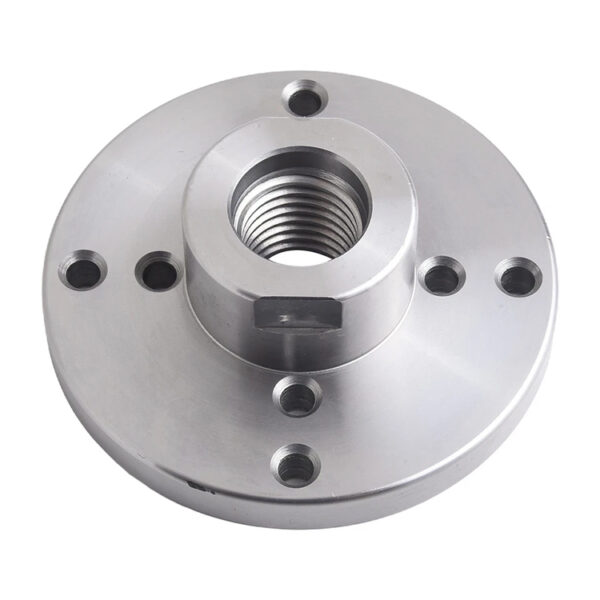
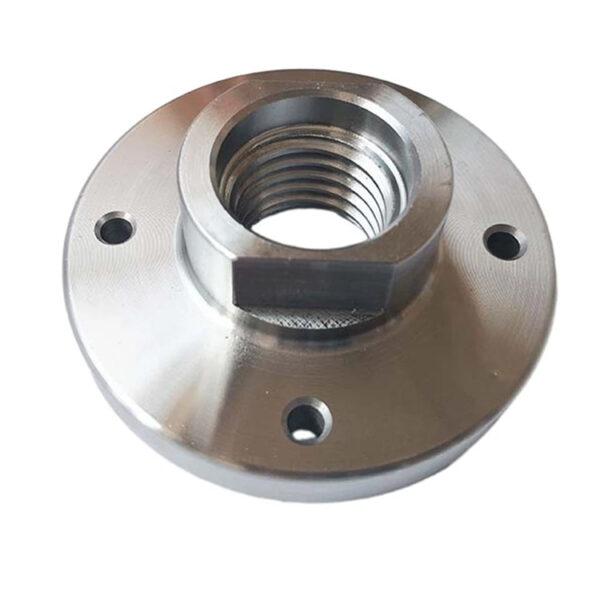
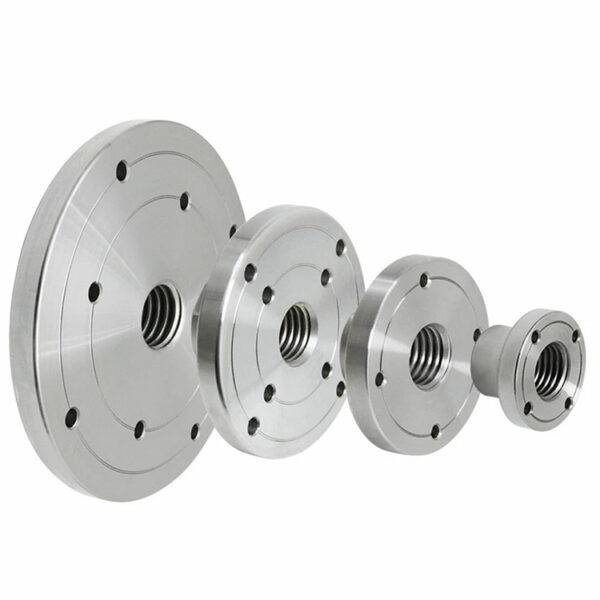
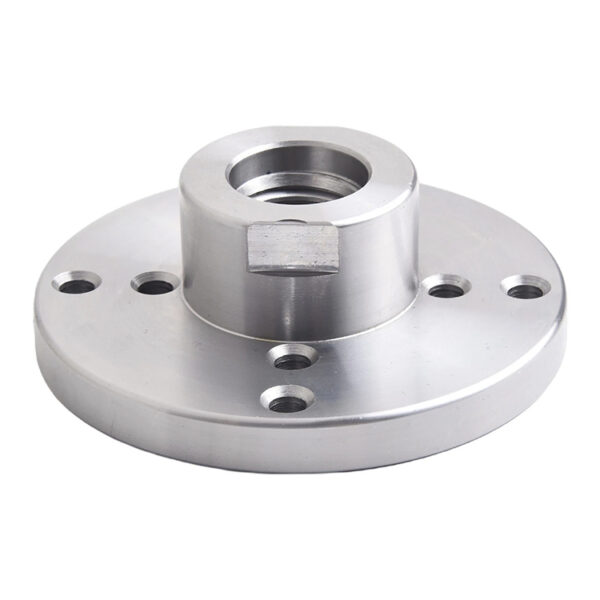
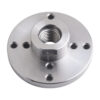
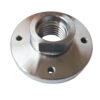
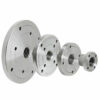
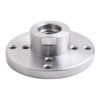
These custom flanges are suited to assemblies that require a concentric center interface together with a defined mounting-hole pattern. CNC turning establishes the circular body, hub, bore, and mating faces, while drilling, threading, and milling complete the fastening and anti-rotation features visible in the part. Material selection commonly includes aluminum, stainless steel, or carbon steel according to the drawing and service environment. Applications include machinery adapters, actuator interfaces, motor or drive mounts, fixtures, and other mechanical connection points.
CNC machined flanges are circular mounting and connection components used to join, locate, or support mechanical assemblies. The parts shown combine CNC turning for the outer diameter, flange faces, raised hub, and central bore with drilling, threading, and secondary milling for bolt patterns and local flats. Distinctive features include an internally threaded hub, evenly spaced mounting holes, and flat mating faces. Common materials include 6061 aluminum, 304/316 stainless steel, and carbon steel. Typical uses include equipment mounts, adapters, actuators, drive systems, and industrial assemblies.
| Material | 6061 aluminum, 304/316 stainless steel, carbon steel, or drawing-specified material |
| Manufacturing Process | CNC turning, facing, boring, drilling, threading, and secondary milling |
| Part Features | Raised center hub, internal thread, circular mounting flange, and distributed fastening holes |
| Mounting Features | Through holes, threaded holes, counterbored or countersunk features as specified by drawing |
| Surface Finish | As-machined, anodized for aluminum, or drawing-specified protective finish |
| Tolerance Requirements | Flange face flatness, bore concentricity, thread dimensions, and mounting-hole position per drawing |
| Applications | Equipment mounts, mechanical adapters, actuators, motor and drive interfaces, fixtures |
| Customization | Outer diameter, flange thickness, thread size, hub geometry, hole pattern, and local milled features |