Before You Go, Let’s Talk About Your Parts
Tell us about your part, quantity, and key requirements. Nova Precision Manufacturing Co.,Ltd can help you choose suitable materials and manufacturing processes for your project.

Source precision brass components for prototypes and production, including fittings, valves, connectors, terminals, fasteners, and decorative hardware. Nova Precision Manufacturing Co.,Ltd supports CNC machining, Swiss-type turning, sheet metal forming, stamping, and secondary finishing. Commonly requested grades include C360, C260, and C464, with C230, C693, and other specified alloys reviewed for sourcing.
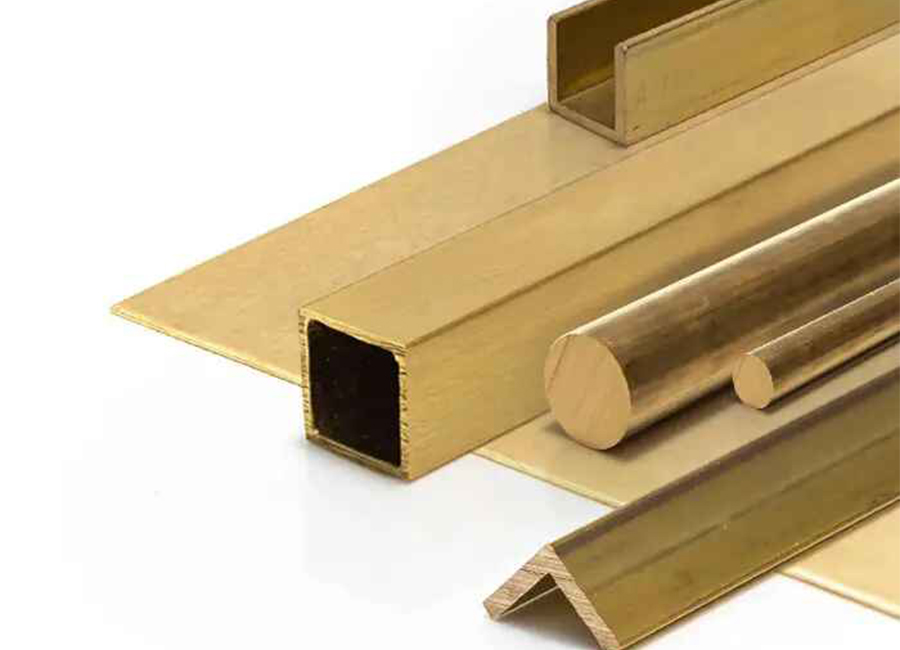
Brass is a family of copper-zinc alloys combining useful corrosion resistance, strength, low friction, conductivity, and a naturally decorative appearance. Compared with high-purity copper, many brass grades are stronger and easier to machine, making them practical for mechanical and electrical components.
Nova Precision manufactures brass parts through CNC milling, turning, Swiss-type machining, drilling, stamping, bending, and secondary finishing. The process is selected around the alloy, stock form, geometry, production quantity, electrical function, joining method, and cosmetic requirements.
Brass grades are not interchangeable. Copper and zinc content, lead level, tin or silicon additions, and material temper can change chip formation, formability, color, conductivity, strength, corrosion behavior, and cost. The grade should be selected around the dominant manufacturing process rather than appearance alone.
Finishing options can include as-machined, tumbled, bead-blasted, brushed, polished, nickel-plated, chrome-plated, tin-plated, or clear-coated surfaces. Untreated brass can darken or develop a patina over time, so the expected appearance and service environment should be defined before production.
The standard choice for high-efficiency CNC turning, milling, drilling, and threading. Its lead content supports short chips, low cutting forces, reduced tool wear, and clean machined surfaces. Common applications include fittings, valves, fasteners, gears, connectors, and precision turned hardware.
A ductile 70/30 copper-zinc alloy better suited to stamping, bending, drawing, and other cold-forming operations than C360. It is commonly used for terminals, clips, rivets, radiator parts, decorative components, and formed sheet-metal products.
A tin-containing brass developed for improved strength and resistance to dezincification in seawater and related environments. Typical applications include marine fasteners, valve stems, pump shafts, fittings, hardware, and wear components. It is harder and less freely machinable than C360.
A higher-copper brass with a warm reddish-gold color, moderate strength, good formability, and useful corrosion resistance. It is selected for decorative hardware, architectural trim, tubing, plumbing components, electrical parts, and formed products where appearance matters.
A lead-free silicon brass option offering good machinability, strength, forgeability, and resistance to dezincification. It is used for valves, fittings, faucets, and water or gas system components. Grade availability and all required compliance documentation must be confirmed for each project.
C360 is optimized for cutting efficiency, while C260 prioritizes cold formability. C464 is selected for demanding marine exposure, and C693 addresses projects requiring a documented lead-free silicon brass. Substituting one grade for another can alter cycle time, forming behavior, corrosion performance, color, and regulatory suitability.
Provide the CAD model and drawing together with the operating fluid or atmosphere, mechanical loads, electrical requirements, joining method, surface finish, plating thickness, and applicable material restrictions. Our team can then review threads, thin walls, burr control, bend direction, springback, plating allowance, and cosmetic surfaces before quotation.