Before You Go, Let’s Talk About Your Parts
Tell us about your part, quantity, and key requirements. Nova Precision Manufacturing Co.,Ltd can help you choose suitable materials and manufacturing processes for your project.

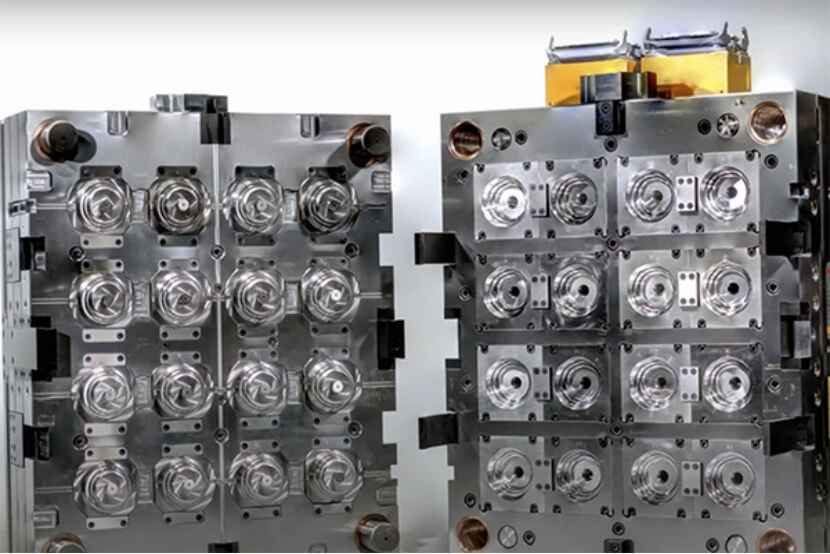
A practical comparison of family molds and dedicated molds for multi-part plastic assemblies, covering cavity balance, tolerances, demand ratios, design risk, and RFQ inputs.
A family mold molds several different parts in the same cycle, and a dedicated mold molds one part design. For a plastic component set, the usual question is whether one tool can replace three or four, and what that saving costs in process control. A family mold fits best when the parts share one resin and color, have similar volume and wall thickness, ship in a fixed ratio, and have a frozen design. A dedicated mold fits better when parts differ in size, demand ratio, cosmetic grade, or revision risk. The tooling quote is only the first number. Cavity balance, scrap, downtime, and demand changes decide the total cost. This guide explains the trade-offs and the information to settle before you request quotes.
A family mold is one injection mold with two or more cavities that each form a different part. Icomold’s overview of family molds distinguishes them from standard multi-cavity molds, which produce several copies of the same part. A dedicated mold is built for one part number. It can have one cavity or several identical cavities.
Three layouts are easy to confuse:
Nova’s production molding guidance makes the same split: multi-cavity tools raise identical-part output per cycle, while family tools run different related parts together. Because the choice is made while the tool is being specified, it is best handled as part of custom injection mold tooling planning, not after the first quote arrives.
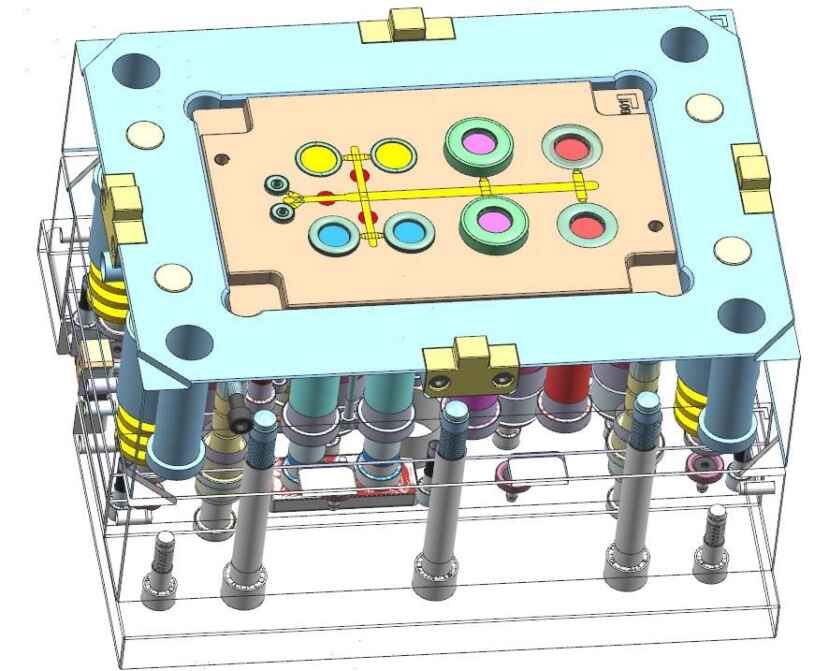
A family mold saves money by sharing one mold base, one design and build effort, one press setup, and one maintenance schedule across several parts. It also produces matched sets, so a missing component rarely holds up assembly.
The saving is real, but it is not linear. Icomold notes that as cavities are added, the tool gets larger, cooling can lengthen the cycle, and a bigger press may be needed. Two parts in one tool therefore do not simply halve the piece price. Lead time can also increase because more steel has to be cut.
This is why “lowest tooling quote” can mislead. The cheaper tool can transfer cost into later stages:
A family mold is not a cheaper dedicated mold. It trades tooling cost for process coupling, and the trade only pays off under specific conditions.
In a family mold, cavities of different volume share one runner system, so the small cavity fills first and then keeps receiving pressure while the large one finishes. The small part is overpacked, which can cause flash, heavy parts, and molded-in stress. The large part may be underpacked, which can cause sink marks or short shots.
Plastics Technology’s guidance on sizing gates, runners, and sprues states the goal clearly: all parts should finish filling at the same time, so they receive comparable packing pressure. It also says that over- or under-packed cavities shrink differently from the rate used to cut the mold. Dimensional error is therefore built into an unbalanced family mold, not only cosmetic error.
The same article recommends adjusting the runner diameter feeding each cavity, because changing gate size alters fill speed and gate-seal time without changing flow rate. Eastman’s processing and mold design guidelines are more cautious still. They advise avoiding family molds if possible because balanced flow is difficult, and balancing by runner diameter, not gate size, when one is required. That is one resin supplier’s guidance for its own polymers, not a universal prohibition, but it shows how the material side of the industry views the risk.
For buyers, the practical conclusion is that a supplier proposing a family tool should describe the balancing method before cutting steel. “We will tune the gates at T1” defers the hardest decision to the point where changes are most expensive.
Similarity in volume and wall thickness is the first screen. The more alike the parts, the easier it is to balance fill and cooling. Fictiv’s family tooling guide says large differences cause one part to overpack while another short shots, and that thickness differences produce uneven cooling and more warpage or sink.
Cooling shows the cost clearly. In the simplified plate model discussed in Nova’s injection molding wall thickness DFM guide, cooling time scales with the square of wall thickness. As an illustration only, a 3.0 mm housing wall next to a 1.5 mm clip wall gives a thickness-squared ratio of 4. Real cycles will not follow that ratio exactly, but the cycle is set by the slowest part. In a family mold, the thin part is held to a cycle that suits the thick one.
Verify with the supplier: the volume and nominal wall of each part, the planned fill time per cavity, and whether the thick sections have been checked for sink on the opposite face.
A family mold uses one material and one color. A single injection feeds every cavity, so this is a physical constraint and not a preference. A set that needs a rigid PC body and a flexible TPE seal, or a black part with a white one, cannot share a family tool.
Matching resin helps in one respect: color and finish stay consistent across a visible set. It does not make shrinkage identical, because shrinkage also depends on wall thickness, flow direction, and packing. Nova’s guide to specifying dimensions for injection molding shrinkage notes that standard test-bar data cannot directly predict shrinkage in a production part with a different geometry and flow path.
Verify with the supplier: the resin grade and color for every part, any glass-fiber content, and which dimensions on mating parts are critical to quality.
Mating parts from one tool share a resin and a press setting, but each cavity still fills and cools in its own way. Fictiv points out that assembly parts from a family tool need compatible tolerances that allow for variation from cooling, shrinkage, and ejection stress, and that tight-tolerance assemblies may need separate molds.
A common pattern is a housing and a lid with a sealing lip or a snap-fit. If cavity pressure differs between the two, the interference can vary from cycle to cycle. A dedicated tool lets each part be dimensionally tuned and, if needed, corrected independently after T1 samples.
Verify with the supplier: which interfaces control fit, how cavities will be measured separately, and whether the tool leaves room for later dimensional adjustment of individual cavities.
Cosmetic parts are tougher to run in a family mold because each cavity needs its own gate position, vestige location, and weld-line plan, all fed from one shared runner. Gate location is already a design trade-off on a single housing, as covered in the guide to gate placement on cosmetic plastic housings. Adding balancing constraints from other cavities narrows the options. Balancing by gate restriction can add shear, which risks blush near the entry.
For a set where one part is a hidden internal bracket and another is a visible bezel, the bezel’s cosmetic needs may justify its own tool.
Verify with the supplier: the A-surface and B-surface map for each part, the gate position proposed per cavity, and the balancing approach that avoids restricting gates on visible parts.
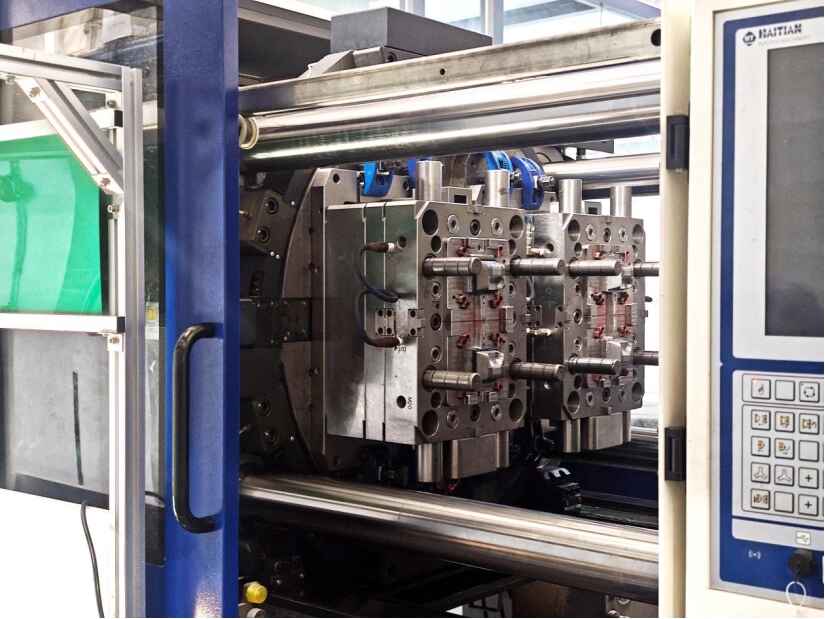
A family tool makes parts in the ratio of its cavities. If the assembly needs one housing and two clips, a 1:1 family tool produces too many housings. As an illustration, building 100,000 products needs 100,000 housings and 200,000 clips, so a 1+1 tool must run 200,000 shots and leaves 100,000 surplus housings. A 1+2 layout fixes the ratio but changes the fill balance again.
Service and spare-part demand creates the same problem later. Icomold notes that spares from a family tool can only be ordered in sets. Blocking off a cavity to avoid overproduction changes the balance the tool was tuned for.
Verify with the supplier: the per-product usage of each part, the expected service demand, and how the tool behaves if one cavity is blanked.
Revisions hit a family mold harder. A change to one part means pulling the whole tool, and a damaged cavity can stop all the parts in the set. If one part is still likely to change, the family tool is a poor commitment.
When design uncertainty remains, prototype molding with simpler tooling lets the team test fit and function on real molded parts before committing to long-life steel. The cavity strategy can then be decided on a stable design and a demand forecast.
The table is qualitative guidance for screening. It does not contain measured cost or cycle data, which depend on the parts, resin, and supplier.
| Decision factor | Family mold | Dedicated single-cavity molds | Dedicated multi-cavity molds |
|---|---|---|---|
| Tooling investment | One tool, but balancing features can add cost | One tool per part, so more tools to fund | Highest per tool, fewer shots per unit |
| Resin and color per part | Same for every part | Independent per part | Same within the tool; independent between tools |
| Fill and packing control | Coupled across cavities | Independent process window | Naturally balanced, since parts are identical |
| Impact of a design change | Whole tool affected | Only the changed part | Only that part’s tool |
| Demand-ratio flexibility | Fixed by cavity ratio | Each part runs to its own demand | Each part runs to its own demand |
| Tight tolerance or cosmetic parts | Higher risk | Best control | Good control if cavities are balanced |
| Failure impact | One damaged cavity can idle the set | Isolated | Isolated to that part |
| Best fit | Small, similar parts; modest volume; frozen design | Dissimilar parts; uncertain design or demand | High volume of each part |
A dedicated mold costs less in total when the family tool would cause enough scrap, downtime, overproduction, or redesign to exceed the tooling savings. That is most likely when volumes are high, demand ratios are uneven, or the design will change.
A useful way to compare quotes is to put both strategies on the same lifetime basis. A production molding program is best judged on tooling, cycle efficiency, scrap, handling, maintenance, and repeat demand together, not on mold price alone. For a family tool, add the cost of balancing trials and the cost of surplus parts from ratio mismatch. For dedicated tools, add the extra setups and inventory handling.
The defensible position is not that family molds are bad. It is that a family mold is the right choice for a narrow profile of project: similar parts, one resin, locked design, fixed ratio, modest volume. Outside that profile, the quoted tooling saving may not survive production.
Specify the whole set, not just the parts, so suppliers can price both strategies fairly. Nova’s production molding page lists the preferred cavity strategy as one of the inputs for a quote, along with quantities, resin, and critical dimensions. For a component set, add the following:
Then ask the supplier to explain the family option:
A supplier who can answer these with specifics is more credible than one who only quotes a lower tool price.
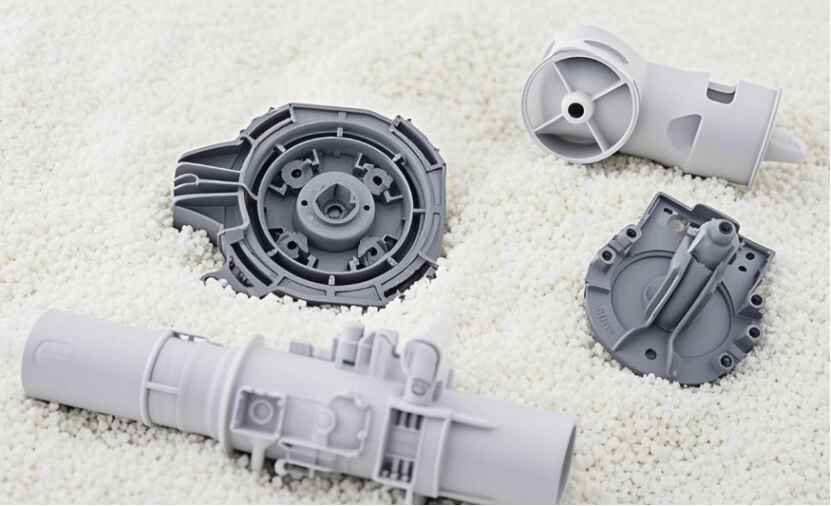
A family mold forms several different parts in one cycle using one tool and one resin shot. A dedicated mold forms one part design, with its own process window, resin, and color. The family option reduces tool count but couples the parts’ fill, cooling, and quality.
Use it when the parts are similar in volume and wall thickness, share one resin and color, are needed in a fixed ratio, and have a frozen design at modest volume. Tight tolerances, cosmetic faces, or uncertain demand favor dedicated tooling.
No. A family mold usually costs less in steel and setups, but balancing work, scrap, longer cycle times from the slowest part, and surplus parts from ratio mismatch can erase the saving. Compare quotes on a lifetime-cost basis.
No. One injection feeds every cavity, so all parts share the same resin and color. A set that needs different materials, such as rigid and flexible components, requires separate tooling or a multi-material process like overmolding.
Common methods are varying runner diameters to each cavity, validating the layout with fill simulation, and sometimes using hot-runner control. Resin guidance generally prefers runner changes over gate changes because restricting gates adds shear and affects gate-seal timing.
It can. Parts share one resin and process, but each cavity fills and cools differently. Tight fits such as snaps, seals, and press fits need cavity-level measurement and compatible tolerances, or separate molds if control is critical.
You must either overproduce the other parts or block off a cavity, which changes the fill balance the tool was tuned for. If demand ratios differ or may diverge, dedicated tools or a cavity layout matching the ratio is safer.
