Before You Go, Let’s Talk About Your Parts
Tell us about your part, quantity, and key requirements. Nova Precision Manufacturing Co.,Ltd can help you choose suitable materials and manufacturing processes for your project.

Order rigid, corrosion-resistant PVC components for chemical handling, water treatment, electrical systems, ventilation equipment, laboratory fixtures and machine guards. Nova Precision Manufacturing Co.,Ltd provides CNC milling, turning, drilling and routing from PVC-U sheet, plate and rod, with CPVC and specialty grades available for project-specific requirements.
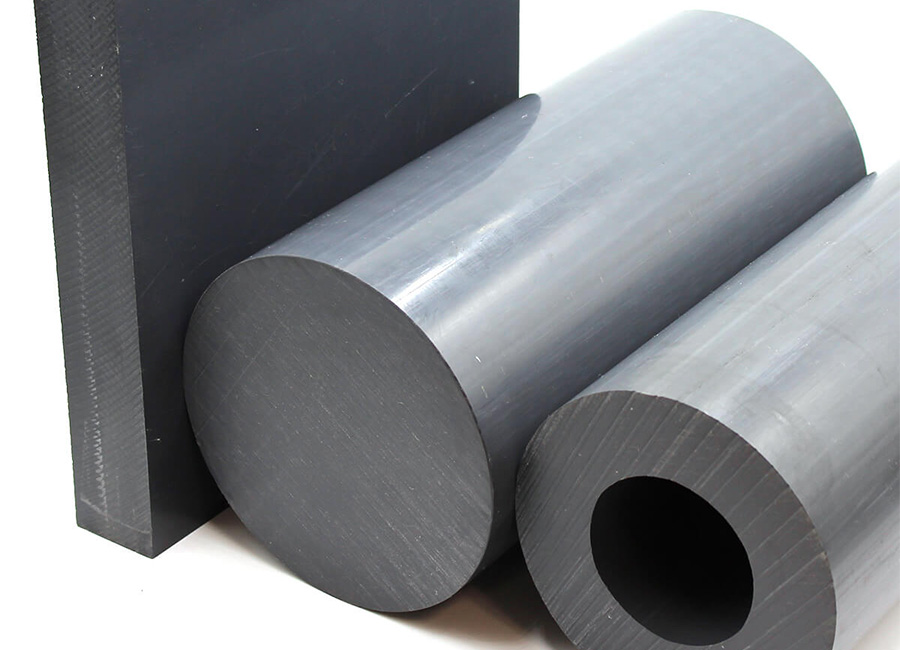
Rigid polyvinyl chloride, also called PVC-U, UPVC or unplasticized PVC, combines stiffness, low moisture absorption, electrical insulation and resistance to many acids, alkalis and salt solutions. It offers a cost-effective alternative to metal in selected corrosive environments.
Common machined and fabricated PVC components include valve bodies, manifolds, flanges, tank fittings, equipment panels, electrical insulators, laboratory fixtures, ventilation parts and machine guards. PVC sheet can also be welded or bonded when the grade and joining method are compatible.
CNC machining is suitable for producing prototypes, replacement parts and lower-volume components from PVC sheet and rod. Molded PVC is possible with properly formulated compounds, but its heat sensitivity requires controlled processing and suitable production equipment.
PVC grade selection depends on chemical concentration, contact time, pressure, temperature, outdoor exposure and impact load. General statements such as “chemical resistant” or “flame retardant” should never replace data for the exact grade, thickness and operating conditions.
PVC Type I provides high stiffness, strong chemical and corrosion resistance, electrical insulation and good machinability. It is commonly selected for chemical equipment, tank components, manifolds, laboratory fixtures and switchgear parts. Grey is widely used, while white, black and other colors may be available.
Discuss PVC Type I PartsPVC Type II uses impact modification to improve resistance to knocks, handling damage and mechanical shock. It may suit guards, housings, covers and equipment components exposed to greater impact. Its stiffness, chemical resistance and temperature behavior can differ from Type I, so the grades should not be interchanged automatically.
Chlorinated PVC, commonly called CPVC or PVC-C, provides higher temperature capability than standard rigid PVC and performs well in many corrosive fluid systems. It is considered for hot-liquid handling, valves, manifolds and chemical-processing components. Exact temperature limits depend on pressure, chemical exposure and grade.
Clear PVC is used for sight windows, transparent guards, laboratory enclosures, partitions and chemical splash barriers. It provides visibility together with useful chemical resistance and fabrication options. Optical quality, impact strength, scratch resistance and weathering performance should be compared with acrylic or polycarbonate before selection.
Static-control PVC is used for equipment guards, cleanroom partitions and enclosures near sensitive electronic processes. Electrical performance may come from a surface coating or a modified compound. The required resistance range, transparency, chemical exposure, cleaning method and coating durability should be included in the specification.
Chemical compatibility changes with concentration and temperature. A PVC grade that performs well with a diluted chemical at room temperature may not be suitable for a concentrated solution, solvent mixture or heated process. Sustained load and elevated temperature can also increase deformation and creep.
During machining, sharp tools and controlled cutting conditions help limit chipping, burrs and heat-related surface damage. Joint design should reflect whether the assembly will use mechanical fasteners, solvent cement or plastic welding. Flame classifications must reference the test standard, material grade, color and evaluated thickness.