Before You Go, Let’s Talk About Your Parts
Tell us about your part, quantity, and key requirements. Nova Precision Manufacturing Co.,Ltd can help you choose suitable materials and manufacturing processes for your project.

Order tough, wear-resistant nylon components for gears, bushings, bearings, rollers, pulleys, guides, clips, brackets, housings and mechanical assemblies. Nova Precision Manufacturing Co.,Ltd supports CNC milling, turning, drilling, routing and injection molding in PA6, PA66, PA12, cast, reinforced and project-specific polyamide grades.
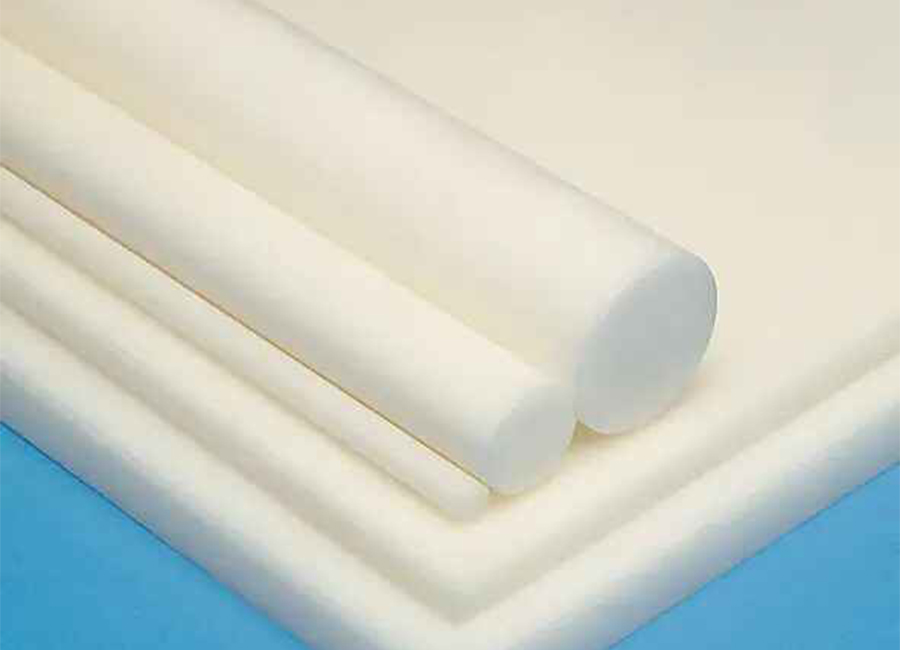
Nylon, also known as polyamide or PA, combines toughness, fatigue resistance, abrasion performance and relatively low weight. Its natural damping and low-friction characteristics make it useful for moving components that would be noisy, heavy or difficult to maintain when produced from metal.
Nylon is a material family rather than one standard resin. PA6, PA66, PA12, cast nylon and reinforced formulations differ in stiffness, moisture absorption, temperature capability, wear behavior and stock availability. Selecting only “nylon” on a drawing may therefore leave important performance requirements undefined.
Parts can be machined from rod, plate, tube and cast stock or produced through plastic injection molding. The manufacturing route affects material orientation, internal stress, dimensional behavior, tooling and production volume. A molded resin and a machined stock shape with a similar material name should not automatically be treated as direct equivalents.
Moisture absorption is an important design consideration. Water uptake can change dimensions, stiffness and impact behavior, so fits and tolerances should reflect the expected operating environment. Inspection condition, service humidity, temperature, load and mating surfaces should be reviewed before production.
PA6 provides a practical balance of toughness, impact resistance, abrasion performance and vibration damping. It is frequently selected for gears, bushings, rollers, guides, wear components and general machine parts. Because PA6 absorbs moisture, environmental exposure and the required fit should be considered when setting tolerances.
Discuss PA6 PartsPA66 typically offers greater stiffness, strength and temperature resistance than unfilled PA6, depending on the specific grade. It suits loaded gears, bearings, structural components, electrical parts and mechanical housings. PA66 still absorbs moisture, so drawings should identify whether dimensions apply in a dry or conditioned state.
PA12 has substantially lower moisture absorption than PA6 and PA66, helping components retain dimensions in changing humidity. It also provides useful flexibility, impact performance and chemical resistance for clips, housings, fluid-handling parts and precision components. Stock form, process suitability and grade availability should be confirmed for each project.
Cast nylon is well suited to large or heavy-duty components because it can be produced in substantial stock sizes with relatively low internal stress. Common applications include large gears, pulleys, rollers, sheaves, wear plates and bearing components. Unfilled, oil-filled and internally lubricated versions should be specified separately.
Glass reinforcement increases rigidity, creep resistance, thermal stability and dimensional control, making these grades useful for loaded brackets, carriers, housings and structural components. The fibers can influence impact strength, surface finish, shrinkage and machining wear. Glass-filled nylon may also abrade mating surfaces, so it is not automatically the preferred choice for every sliding part.
Nylon grades with similar names are not necessarily interchangeable. Moisture, reinforcement and internal lubricants can change stiffness, toughness, wear behavior, shrinkage and final dimensions. Specifications should state whether acceptance dimensions apply to dry-as-produced, conditioned or service-equilibrated parts.
Send Nova Precision Manufacturing Co.,Ltd your 3D model, 2D drawing and application information. Our team can review stock shape, material orientation, balanced material removal, clamping, heat control, staged machining, resin drying, wall design and inspection requirements before manufacturing begins.