Before You Go, Let’s Talk About Your Parts
Tell us about your part, quantity, and key requirements. Nova Precision Manufacturing Co.,Ltd can help you choose suitable materials and manufacturing processes for your project.

Manufacture impact-resistant polycarbonate components for machine guards, windows, lenses, light guides, housings, covers, and structural parts. Nova Precision Manufacturing Co.,Ltd supports CNC milling, turning, drilling, routing, and injection molding in clear, UV-stabilized, reinforced, flame-rated, and specialty PC grades.
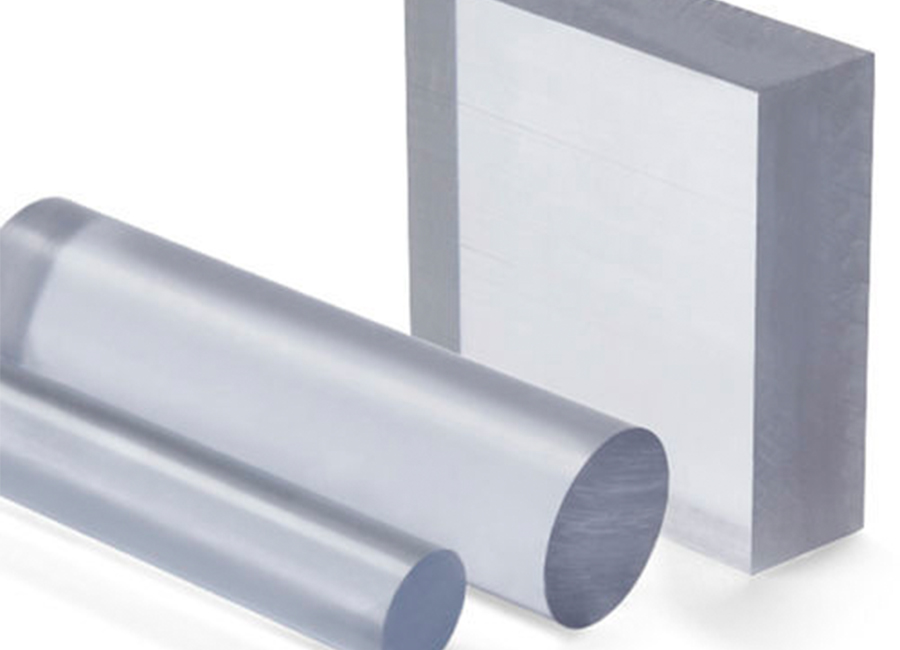
Polycarbonate, commonly abbreviated as PC, combines exceptional impact resistance with transparency, heat resistance, stiffness, electrical insulation, and relatively low weight. It is widely selected for parts that must remain tough while providing visibility, light transmission, or dimensional control.
Compared with acrylic, polycarbonate offers much higher impact strength and better performance at elevated temperatures. Acrylic generally provides better surface hardness, weathering, and polished-edge appearance. The right material depends on whether impact resistance or optical finish is the main requirement.
PC parts can be CNC machined from sheet, plate, rod, and tube or injection molded from application-specific resin. Machined stock and molding resin are not automatically equivalent in optical quality, UV stability, flame rating, color, or regulatory documentation.
Sharp corners, excessive clamping, machining heat, molded-in stress, incompatible cleaners, and over-tightened fasteners can cause cracking or crazing. Internal radii, hole spacing, assembly load, chemical exposure, protective coatings, and inspection requirements should be reviewed before production.
Clear PC is used for machine guards, inspection windows, transparent housings, instrument covers, light bezels, and functional prototypes. It offers high impact resistance and good machinability, but “clear” does not automatically mean optical grade. Transmission, haze, tint, surface marks, and viewing zones should be specified.
UV-stabilized PC is designed for outdoor guards, transportation components, lighting covers, exterior housings, and exposed glazing. Stabilization helps limit yellowing and property loss, but outdoor life still depends on grade, thickness, color, coating, climate, orientation, and required appearance.
Glass reinforcement increases stiffness, creep resistance, and dimensional stability under sustained load. It suits structural housings, brackets, carriers, internal mechanisms, and electrical components. Glass-filled PC is usually opaque and may have different impact, surface, shrinkage, and machining behavior from unfilled transparent material.
Flame-retardant PC is selected for electrical enclosures, connectors, battery components, lighting equipment, controls, and electronic housings. Specify the required UL 94 classification, test thickness, color, temperature rating, and certification. A flame rating for one thickness or color should not be applied automatically to another.
Optical and coated PC grades support lenses, sensor covers, display windows, face shields, lighting components, and frequently handled panels. Hard coatings can improve abrasion, chemical, and UV resistance. Specify coating side, optical zone, haze, wavelength, edge exposure, permitted defects, and whether machining occurs before or after coating.
Clear, UV-stabilized, glass-filled, flame-retardant, optical, and hard-coated polycarbonates are not direct substitutes. Additives and coatings can change transparency, impact strength, shrinkage, chemical resistance, surface appearance, processing conditions, and cost.
Provide the 3D model and 2D drawing with quantities, material form, operating environment, viewing areas, assembly method, cleaners, finishes, and certificate requirements. We will review cutting heat, tool access, clamping, stress concentration, polishing allowance, resin drying, wall balance, gate location, and cosmetic handling before quotation.