Before You Go, Let’s Talk About Your Parts
Tell us about your part, quantity, and key requirements. Nova Precision Manufacturing Co.,Ltd can help you choose suitable materials and manufacturing processes for your project.

Source clear, colored, frosted, or specialty acrylic parts for windows, displays, covers, light guides, lens components, and equipment panels. Nova Precision Manufacturing Co.,Ltd supports CNC machining, routing, drilling, laser cutting, heat forming, bonding, and injection molding in cast, extruded, molding-grade, and project-specific PMMA.
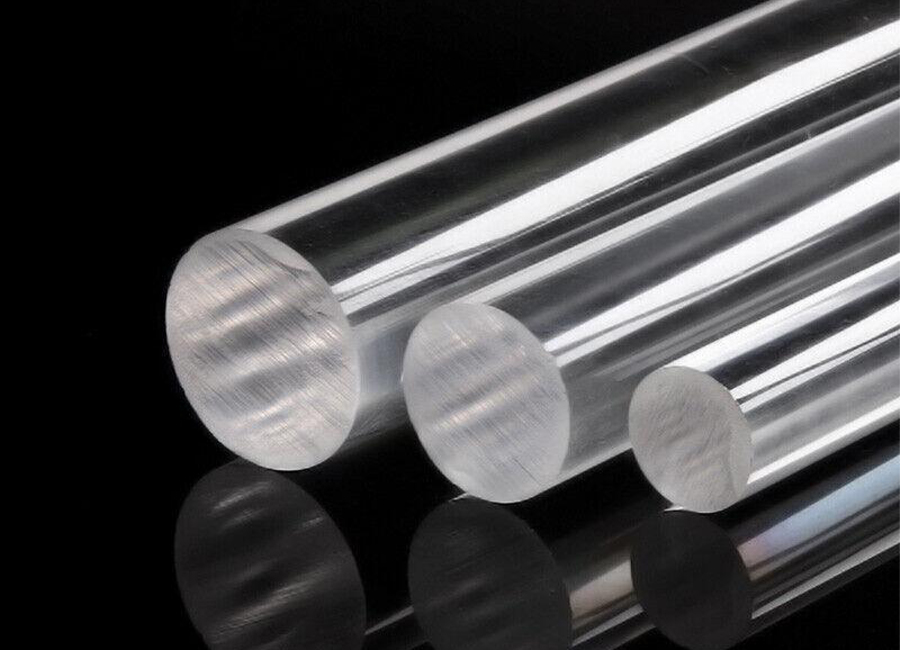
Acrylic, also called PMMA, combines optical clarity, surface gloss, weather resistance, stiffness, and relatively low weight. It is commonly selected for parts requiring visibility, light transmission, polished edges, color, or a glass-like appearance without using glass.
Available processes include CNC milling, turning, routing, drilling, laser cutting, engraving, heat bending, bonding, polishing, and injection molding. The correct route depends on whether the material is cast sheet, extruded sheet, rod, tube, or molding resin.
Acrylic is more brittle and notch-sensitive than many engineering plastics. Sharp internal corners, poorly positioned holes, excessive clamping, cutting heat, and residual material stress can cause chipping, cracking, or crazing. Tooling, support, cooling, and feature geometry must be planned accordingly.
Edges can be left machined, sanded, buffed, diamond-polished, flame-polished, frosted, or laser-finished. Protective masking should remain on cosmetic faces whenever possible. Edge clarity, viewing surfaces, permitted tool marks, and scratch limits should be defined before production.
Cast PMMA generally has lower internal stress and is preferred for demanding CNC machining, engraving, bonding, and polishing. It suits inspection windows, display panels, transparent housings, light guides, covers, and prototypes requiring clean surfaces or polished edges. Thickness tolerance should be reviewed when final thickness is important.
Request a QuoteExtruded PMMA offers consistent sheet thickness, broad availability, and economical production for panels, signs, guards, diffusers, and laser-cut components. It also supports heat forming. Higher residual stress can increase melting, chipping, or crazing during machining and bonding, so the process should match the geometry.
Molding-grade PMMA is used for repeat-production parts such as transparent covers, light housings, display components, instrument windows, and cosmetic enclosures. Resin flow, optical quality, UV stability, impact modification, color, shrinkage, and surface requirements must be matched to the mold design and application.
Impact-modified PMMA improves toughness while retaining much of acrylic’s clarity and weather resistance. It is considered for equipment covers, transportation glazing, outdoor panels, displays, and components exposed to moderate handling or impact. It does not automatically provide the same impact performance as polycarbonate.
Specialty grades can control UV transmission, glare, light diffusion, scratch resistance, or cleaning performance. They suit light guides, displays, framing, instruments, and frequently handled panels. The required wavelength range, haze, coating side, surface hardness, color, and approved cleaning chemicals should be specified.
Cast, extruded, molding-grade, and specialty acrylics are not interchangeable. Material form can change thickness tolerance, residual stress, machining behavior, bonding response, optical distortion, color, and cost. Standard weather resistance also does not mean the material provides a specified UV-filtering wavelength.
Provide the 3D model and 2D drawing with quantity, material type, stock thickness, optical zones, illumination, viewing distance, edge class, fasteners, adhesives, cleaners, finish, and inspection requirements. We will review radii, hole spacing, clamping, heat buildup, polishing allowance, thermal expansion, and cosmetic handling before quotation.